No journalist shows up to solve the 1944 “radio noir” mystery of “The Comic Strip Murders,” but the audio drama draws an over-the-top picture of dedicated newspaper readers, and the popularity of newspaper crime comics like “Dick Tracy” and “The Spirit.”Most of the story is told from the point of view of a district attorney interviewing the wife of a comic strip artist whose creation seems to be taking on a murderous life of its own. Is the artist going mad and planning to murder his wife in a decorative fish pond full of acid?
The “tense and frightened” wife says she has lived with the madness of increasingly gory comic strip murders for nine years — and that she expects to be killed at midnight:
“You follow Buzz O’Keefe in the Morning Telegraph, don’t you? Of course. Everybody does… one bloody episode after another… blood and pistol shots and poison and charred bones…”
Fortunately, Molle Mystery Theatre was not a continuing-serial-drama, so the whole story is told in one half-hour episode.
A full newspaper page of Dick Tracy, 1938
For our newspaper-in-popular-culture perspective, throughout the broadcast we hear obsessed comic strip fans discussing new episodes of the newspaper crime comic strip serial about a detective and sadistic killers.nThe radio actors use a variety of accents, highbrow and low, to suggest a strip as popular as “Dick Tracy,” and as full of grotesque characters.
The newspaper readers’ guilty-pleasure involvement wIth the strip is reminiscent of morning-after discussions of “The Sopranos,” “Dexter” or similar hit TV shows today.
(It also has some of the comic strip readers muttering about comics not being funny anymore, a topic that even turned up in serious academic research. See Hutchison, below.)
Were newspaper readers this involved with comics? Perhaps — remember 1945 was the year that the mayor of New York took to the air reading comics to citizens deprived of their papers during a delivery strike. A New York Daily News documentary captured his performance, as well as the passionate newspaper audience standing in long lines outside pressroom loading docks. Download the film at the Internet Archive or see three YouTube clips from it on my “Real Newspapers” page.
Back to Molle’s “Comic Strip Murders” episode, the broadcast even used the comic-strip theme in a commercial for its sponsor, Molle shaving cream, having the presenter laugh heartily at a user of a competing brand nicking his face in a comic called “The Little Shaver.”
While violence in comics is not the topic of “Newspaper Heroes on the Air,” here are a few links for readers who stumble on this page because of its title. For crossover research on comics and violence, see articles like “Male and female relations in the American comic strip” by G. Saenger, in D. M. White & R. H. Abel (Eds.), The funnies, an American idiom (pp. 219-231). Glencoe, NY: The Free Press (1963), and Bruce D. Hutchison’s “Comic Strip Violence, 1911-1966,” in Journalism Quarterly, Vol. 46, 1969, pp. 358-362. (The latter content analysis research said 100 per cent of newspaper strips were literally “comic” in 1911, with “serious” strips beginning in 1924 and becoming the most common by the 1940s. What Hutchison called “crime and crime-cowboy strips” amounted to 18 percent of the comics during World War II.) Newspaper comic strips were a common topic for academic research in the 1950s and 1960s. See, for example, “Trends in Newspaper Reading: Comic Strips, 1949−54,” by Jack B. Haskins and Robert L. Jones, Journalism & Mass Communication Quarterly, 1955, 32: 422.
Interest in the topic went international. The Internet Archive has full-text copies of the 1977 Canadian Royal Commission on Violence in the Communication Industry report, “Violence in Print and Music,” with an extensive bibliography.
A lighter approach…
For a more recent book-length treatment, see Why We Watch: The Attractions of Violent Entertainment, edited by Jeffrey Goldstein (1998), Oxford University Press.
Other recent studies include Henry Jenkins’ research into audiences, fan cultures and “transmedia” from comics and films to television and video games. For example see his book, Convergence Culture: Where Old and New Media Collide, New York University Press, 2006, or this 2011 course syllabus for “Comics and Graphic Storytelling.”
Movie-crossover fans might enjoy the lighter approach to a similar story, the comedy “How to Murder Your Wife,” with Jack Lemmon and Virna Lisi as the cartoonist and his suspicious wife, plus Terry Thomas as the cartoonist’s valet. I wonder how many times TV and films have explored the darker side of cartoonists?
I see “Martin Kane Private Eye” had a TV episode with a similar name: The Comic Strip Killer, but the plot twist was that the cartoonist based his strip on a true-crime story and promised to reveal the murderer’s identity… unless the killer got to the penman first. At this writing, YouTube has the full episode online:
Lee Tracy stars as the detective here, not a journalist playing detective, the way he did in the original “Dr. X” and other movies. Tracy was no stranger to fictional newspapers, having been the original Hildy Johnson on Broadway’s “The Front Page,” the Winchell-like gossip in “Blessed Event” and a reporter or editor in many other pictures.
What do the movies “All About Eve” (1950) and “Arsenic and Old Lace” (1944) have in common that is relevant to this blog, other than their popularity with radio producers who adapted them for broadcast? There are no corpses or “Boris Karloff” jokes in “Eve,” and no backstage intrigue in “Arsenic.”
Answer: Newspapers’ Broadway critics play a central role in both stories. In “Eve,” the oily Addison DeWitt is a columnist as powerful as a Winchell, shaping ambitious young star Eve’s career. In “Arsenic,” Mortimer Brewster’s profession as a reviewer — and his negative attitude toward current plays — become the excuse for several in-jokes about the theater, including a key scene that subjects him (bound and gagged) to a script-reading by a beat cop with literary aspirations.
Straddling the dramatic world and the newspaper world, press critics and entertainment columnists were natural characters for film and radio scriptwriters to satirize or to use as go-betweens with the audience.
I’ve written more about Arsenic and Winchell elsewhere here at JHeroes, but apparently have neglected “All About Eve” and Mr. DeWitt, a role that won actor George Sanders one of the film’s six Academy Awards… So here are two radio incarnations, from Lux and Theater Guild on the Air 1952. (Both mp3 files are in Internet Archive collections.)
— Lux
— Theater Guild
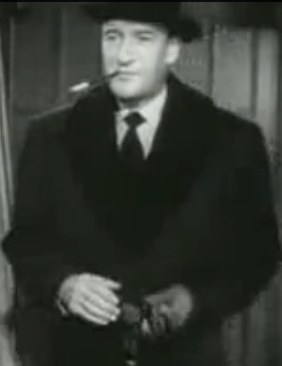
Academy Award winner George Sanders as Addison Dewitt
In the U.S. Steel Hour Theater Guild production, DeWitt takes on a greater role as narrator of the story, perhaps becoming a more likeable character in the process. What do you think? His self-described “contempt for humanity and insatiable ambition” may get in the way.
To those of you who do not read, attend the Theater, listen to uncensored radio programs or know anything of the world in which we live – it is perhaps necessary to introduce myself. My name is Addison DeWitt. My native habitat is the Theater – in it I toil not, neither do I spin. I am a critic and commentator. I am essential to the Theater – as ants are to a picnic, as the boll weevil to a cotton field…
The power of the critic: Addison gets an audition for a protege by promising to plug the producer’s work. When Eve upstages the protege, he switches teams.
He claims he is dedicated to the theater, not the newspaper: “I have no other world, no other life.” The script describes his voice as “crisp, cultured, precise.”
His self-importance: “I am somebody,” he informs Eve Harrington, before writing the column that launches her career.
The critic as investigative reporter: It’s a “spoiler” if you haven’t seen the film, but DeWitt is the one who uncovers Eve’s real story. It would be a headline sensation, but he doesn’t print it — and not out of a great spirit of ethics. True to himself alone, he ultimately uses the knowledge to gain control of Eve’s career.
The Oscar-winning film All About Eve starred Bette Davis as Margo Channing, Anne Baxter as Eve Harrington and George Sanders as DeWitt, with Celeste Holm as Margo’s friend Karen. Davis and Baxter appear in the Lux version, with Reginald Gardner as DeWitt.
Alan Hewitt was DeWitt and narrated the Theater Guild version. It starred Tallulah Bankhead as a much more over-the-top comedic Margo and Beatrice Pearson as Eve. Mary Orr, author of the original short story, “The Wisdom of Eve,” played the supporting role of Karen, the star’s friend who is manipulated by the up-and-coming Eve.
According to several online sources, including Turner Classic Movies, Orr annoyed Bankhead by insisting that her story was not about any incident in Bankhead’s life, while Bankhead thought Davis’ performance was an imitation of her — which she hints about at the beginning of her radio performance.
Speaking of online sources, if these bits of film and radio history have you curious about Broadway history, you’ll have noticed a reference to a playwright named Clyde Fitch (1865-1909), whom Margot Channing protests was “before my time,” here is Fitch’s bio at Wikipedia.
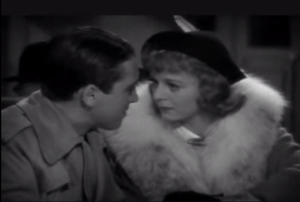
Next Time We Love, a 1936 “struggling marriage” melodrama with a young James Stewart as a reporter and Margaret Sullavan as his aspiring actress wife, was adapted for radio repeatedly, including versions with Stewart and the very different Jimmy Cagney as newsman Chris Tyler. I hate to give away the ending, but a box of tissues may come in handy long before the final minutes. And the radio adaptations might be “spoilers” for folks who want to see the film with all possible suspense.
Stewart & Sullavan: Next Time We Love
Troubled marriages are a common theme in “newspaper movies,” from “The Front Page” to serious films like “Penny Serenade” and “Gentleman’s Agreement.”
What was it that inspired so many radio adaptations of this “Next Time…” film? Maybe audio-only storytelling seemed perfect for a sentimental drama where dialogue played a bigger part than costume, setting or action.
The story also has a modern twist — especially for 1936 — in that the complications aren’t just between a newsman’s schedule and leading a “normal” domestic life. There’s a “two career problem,” with a wife who builds her own success, from college dropout in the opening scene to celebrity actress.
She respects his professional decisions, even when he becomes a foreign correspondent. At one point he offers — or threatens — to take a publicity job with a circus, but she argues against it. It wouldn’t he journalism.
If he had heard of an opening as a theatre critic (or playwright), the film might make an even better double-feature with “All About Eve”! (That classic film was also adapted for radio several times.)
Above all, this is a love story — they love each other and they love their careers. For the literary-minded there’s a bit of foreshadowing when Chris mentions that his apartment was once used by O.Henry — and there’s a hint of that author’s “The Gift of the Magi” in the way the husband and wife hide sacrifices from each other.
“I wonder what they do to newspapermen to make them work so hard… maybe they hypnotize them.” — best man, as groom leaves bride to cover a big story on his wedding night.
Ursula Parrott wrote the original story, serialized as “Say Goodbye Again,” then published as “Next Time We Live.” The title became “… Love” in the Melville Baker film adaptation, although the original “… Live” title was used in foreign release of the film and in at least one of the radio versions.
Most of the broadcasts compressed the story into a half-hour, which couldn’t help but sacrifice plot details and character development, and rely on either awkward narration or the audience’s preconceived notions about newspaper reporters and dramatic actresses. Still, the top-flight actors who played the roles for radio brought their own nuances. Jimmy Cagney, for example, is a more driven, angrier and more frustrated version of the reporter than Stewart.
“The same old story: Reporter marries actress; she makes more than he does. It goes to her head; career becomes more important than her husband, and she runs out on him.” — the husband, but he apologizes for putting it that way, adding “I’ll love you when you’re 99 and I’m 101.”
The film title was used for a now-unavailable hour-long 1938 broadcast as an episode of Lux Theatre starring Sullavan, but joined by Joel McCrea instead of Stewart. Collectors’log entries say the program aired Nov. 07, 1938, but none identify a copy of the audio as being available today.
Stewart — without Sullavan — played his original role in a one-hour radio version for NBC’s Screen Director’s Playhouse in 1951, with Eleanor Parker, a fairly complete version of the story, met with resounding applause from the live audience at the end, as well as a brief appearance by the film’s original director, E. H. Griffith.
Next Time We Love, 1948
Radio’s Screen Guild Theatre broadcast the story at least three times. Two of those half-hour broadcasts are in “circulating” audio collections and one is online in script form. The first was in 1940, under the title “Next Time We Live,” starring James Cagney and Olivia de Havilland.
Under either title, “Maybe the next time we live we’ll have time for each other” is still a line spoken at a dark moment in the story. The name is not mentioned in the broadcast, but there is an interesting conversation with the stars at the end of the 1940 broadcast in which Cagney is asked whether he’d like to be a foreign correspondent.
“Nothing doing on this foreign correspondent business. If I had to be a newspaperman, give me a soft spot covering big league ball games. I’d rather duck pop bottles than bombs any day.” —Jimmy Cagney
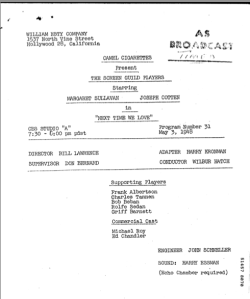
The “as broadcast” script of the 1948 production with Margaret Sullavan is available online. Sullavan recreated her original role opposite Joseph Cotten in the James Stewart part for that broadcast.
Also available in online archives is a half-hour production for Theater of Romance in 1946, which focus even more on the woman’s side of the story — with Joan Blondell getting the star billing, and an unidentified leading man, who sounds like Howard Duff, radio’s Sam Spade. (J. David Goldin’s RadioGoldIndex “Romance” entry lists Duff next in a cast that also included Lou Merrill and Gerald Mohr.)
Journalism students should find food for ethical thought in this encounter between a newspaper reporter and “The Couple Next Door.”
Peg Lynch, Alan Bunce, and the always-present daily newspaper
Prelude: Little Betsy got a bad mark at school; all the children laughed at her… and just for repeating something that her father told her. So, trying to get a teacher to admit to a mistake, her father pulled her out of school. A reporter got wind of this…
The dispute was all about a “who discovered America first?” discussion — Columbus vs. Leif Ericson. The real drama begins when (as the episode title summarizes) the a “Newspaper Interviews Betsy.”
A ringing doorbell sets the scene, with reporter Bill Bates apologizing for appearing so early (“Those were my orders…”) and addressing the sleepy homeowner, who insists he has nothing to say:
Reporter Bates: “Mr. Piper, if you’re going to get yourself in the news you’ll have to expect reporters…”
Mr. Piper: “I am not ‘in the news.’ This is a completely personal matter…”
Bates: “My chief doesn’t think so, Mr. Piper. He thinks it’s news when a little girl is expelled from school because her father taught her to say that Columbus did not discover America…”
Mr. Piper (getting worked up): “My daughter was NOT expelled from school. I took her out of school…”
The bit of “expelled” misinformation may be a fishing expedition to get Piper talking; if so, it does its job.
“It’s just an assignment to me, but I have to get the story…” is how Bates explains it to Betsy’s father. Piper insists that he wants no “idiotic publicity” in the paper and promptly threatens to punch the reporter in the nose — which the inquiring journalist admits would give him an even better story.
Unpunched but undeterred, Bates is persistent enough to come back — and get the exclusive scoop from Betsy herself, complete with a photo of her, later supplemented by a cartoon from the paper’s art department.
The reporter’s technique approaches creepiness, as he coaxes the story out of the little girl:
“Hello there, young lady… Is your Mommy home?… I’m not a stranger; I met your Daddy… Well, it’s always more fun to talk to a pretty little girl anyhow… Come on, I’ll play catch with you… How come you’re not in school?”
Unfortunately for her parents, Betsy took some of her father’s simplified explanation about her mother’s Norwegian ancestors (whom he described as “relatives”) a little too literally — enough to give the reporter a great “lead” and headline.
As Betsy’s father, actor Alan Bunce had great dialogue to work with — thanks to his co-star, author/actress Peg Lynch. Bunce, an expert at the slow-boil and sudden meltdown, is just the kind of human who can suffer from “human interest” reporting.
For purposes of this blog, “The Couple Next Door” provides strong examples of how radio reflected the culture of news-reading during the heyday of both newspapers and radio drama — how important the local daily and “getting your name in the paper” were to 20th century Americans.
This episode is especially good at showing the impact routine feature stories can have on the average human — the kind of thing the Society of Professional Journalists Code of Ethics covers succinctly in its “Minimize Harm” passage this way:
Show compassion for those who may be affected adversely by news coverage. Use special sensitivity when dealing with children and inexperienced sources or subjects.
Lynch wrote other episodes of her series “Ethel & Albert” and “The Couple Next Door” that have fun with reporters getting their facts wrong, whether it’s a story about a club meeting, a big fish, or the discovery of America. They are all in good fun, but perhaps they suggest some general anxieties about “the power of the press” — or the competence of local news reporters.
As Bunce’s “Daddy Piper” summarizes, “Honey, ain’t nobody going to let us forget this for a long time.”
In fact, in the next April 25 episode Piper’s boss sees international repercussions for his company if the little “human interest story” gets to his Italian business colleagues. Now there’s an angle Bates-of-the-Chronicle could sink his teeth into!
From its first scene, the 1949 Superman adventure The Mystery of the Flying Monster demonstrates how radio reminded its audience of the culture of 20th century American newspapers.
The story doesn’t start with the clack of typewriters, the clatter of teletypes or the roar of the press — those come later.
Instead, it begins with a reader on the telephone to the Daily Planet advertising department, calling in a classified ad for the “personals” column:
Wanted:
A young man to assist in a scientific experiment. Must be intelligent, trustworthy and absolutely fearless. The pay is small, but the opportunity for adventure is unlimited. Apply to Professor Joshua Fields…
The ad might as well be for Jimmy Olsen’s job at the Metropolis Daily Planet, which already had taken him from pirate islands to wild-west dude ranches and ghost towns during the previous decade of “The Adventures of Superman.” Unlike most Superman movies, where the fate of the world hangs on the balance, the radio series based most of its plots on news reporting assignments involving Clark Kent, Lois Lane and copy boy or cub reporter Olsen. Radio put the reporters — and the Daily Planet — in the spotlight more than most of Superman’s pop culture incarnations.
Back in the early 1940s, when Jimmy was clearly a “copy boy” and too young to go on a news assignment of his own, the scriptwriters frequently had the eager and “absolutely fearless” lad stow away on a boat or plane, or somehow get to where the action was. After all, the series was aimed at listeners closer to his age.
As a bonus, young listeners received daily reminders that newspaper careers were important — and available. So were newspapers, and even boys and girls Jimmy’s age were probably already newspaper consumers. For example, the 1940 story “Yellow Mask and the $5 Million Jewel Robbery” starts with Clark and 12-year-old Jimmy on a train reading the paper — and Clark offers Jimmy the comics and sports section when nothing on the front page catches his interest.
Back in this 1949 episode, we get more newspaper information. We learn the Daily Planet is a multi-edition metro paper, with a “noon edition” already on the street while “Ace newspaper woman Lois Lane” is at the office pounding out a story for the next deadline, something about an announcement from the district attorney.
The authoritative tones of the announcer set the scene (after an ad for young publishing entrepreneurs interested in making and selling greeting cards):
“Someone once said ‘History is just a batch of old newspapers.’
Here in the building where the Metropolis Daily Planet, one of the country’s leading newspapers, is published, history is being recorded as it happens. The clatter of the teletypes seldom pauses; the phones never stop ringing; the presses roll night and day…”
Jimmy Olsen is busy too, risking the wrath of the editor by giving himself an assignment — to find out whether there’s a story behind that classified ad. He’s afraid that if he just tells the editor, the assignment will be taken away and given to Lane or Clark Kent. When he mentions his plan, Lois is skeptical about the idea. Perhaps she was too preoccupied with her own story to lecture him on risk-taking or reportorial ethics, beyond saying the story could be “silly, dangerous, or both.” It’s unclear whether Jimmy plans to identify himself as a reporter when he takes the job. Granted, Lois is not always the greatest role model in those areas herself. In any case, she relays Jimmy’s message to their boss.
“Might be a story in it at that,” admits Perry White, before blustering that the “young scamp” had no right to leave the office and go out on a possibly dangerous assignment his own, then — in character — leaves the room sputtering that the lad is fired. However, he turns kind and fatherly later, when Olsen disappears in an explosion at the scientist’s laboratory.
The “flying monster” of the story title is what the newspaper business might call a “tease,” as the script tries to build some suspense about the exact nature of the experiment for which the professor was in need of an “absolutely fearless” assistant. A sharp 12-year-old listener probably had it figured out in seconds, but the story is more about action than suspense, and the “Adventures of Superman” sound-effects department had a workout on this 1949 episode, from the newsroom sounds muffled behind the door of Lois’s private office to roaring engines, massive explosions and Superman’s super-sonic flight — which also gives announcer Jackson Beck a chance to show his stuff as a play-by-play narrator of the thrilling conclusion.
This story came early in the “each story complete” half-hour format the series used for its last couple of years, after a decade as a “to be continued” serial, and before television’s Superman took over as the broadcast representative of the comic book franchise.
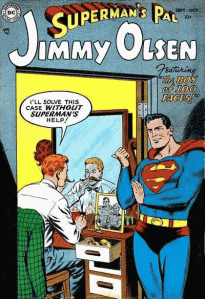
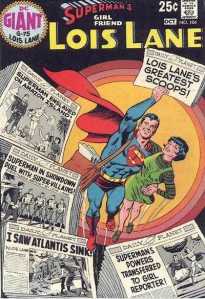
Fans who have are willing to wait a year or more for a new “Superman” movie — or a month for a new comic book — should be impressed that in 1950 radio delivered three full stories a week, not unlike that Daily Planet delivering multiple editions a day, and 10-cent monthly comics spinning off related titles, from the original Action Comics to Superman to Superman’s Girlfriend Lois Lane and Superman’s Pal Jimmy Olsen.
It was a different roaring-presses world back then, before 24/7 TV and the Internet!
More sources (some “boilerplate” repeated from yesterday’s edition):
With the new “Man of Steel” movie opening today, I have to point out that the keepers of the Superman flame have seen fit to “reboot” the storyline many times in its history, and the role of journalism in the series has waxed and waned as a result.
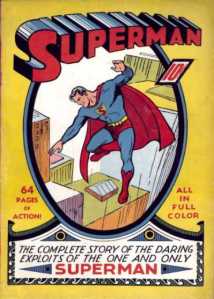
The successors of the 1938 Action comic book, the 1939 Superman comic (right) and the 1940 radio serial frequently added to and transformed the child-from-Krypton’s origin story, his family, his friends and their personalities. Case in point: The radio series that began as a 15-minute cliff-hanger serial in 1940 was transformed in 1949 to a longer, full-story half-hour version. (In comparison, some serial “story arcs” ran for more than 20 episodes, plenty of room for journalistic storytelling and a bit of crusading.)
Like the earlier series, the “$10,000 Ghost” story kept Clark Kent working for Perry White at The Daily Planet, along with Lois Lane, Jimmy Olsen and other reporters who never made it into the movies — including Horatio Horn, a comic-relief rural correspondent, telegrapher, postmaster and amateur detective, who is featured in this story.
White, as I mentioned last time, was elected mayor of Metropolis in 1947, but continued his editorial duties. Now, still wearing both hats in 1949, White assigns Kent to investigate a series of missing person cases, giving him another reporter to assist while Lois is off with Horatio.
As in many of the earlier serial episodes, the newspaper investigative reporting is the motivation for the whole plot. The “Man of Steel” isn’t out to fight some threat to the city, the planet or the universe, he’s essentially the reporter’s ace in the hole. Kent at first switches to Superman to fly to distant locations “on assignment,” and he uses his super hearing, X-ray vision and other powers to help get the story… and, of course, Superman is ultimately on the spot to help Lois and other reporters get out of the trouble that covering crime and disasters almost inevitably leads them into.
In this tale, although Lois and Horatio wind up in need of rescue, they are portrayed as curious, smart and cool-headed reporters. They are just out-numbered and out-gunned by the villains.
Not all the Superman scripts were as kind to Lois, as we’ll hear in a separate episode, “The Mystery of the Little Men.”
In this 1949 single-episode story, Lois is literally hysterical, panicked by strange creatures that appear outside her window. Except for her screaming, the story reminds me of some of the weaker comic book plots from the 1950s, complete with “twist” endings — dream sequences, practicsl jokes, magic, or misunderstandings — that were often a letdown. Maybe by this last year of the radio series, producers and writers were putting more of their creative energy into the new “Adventures of Superman” television series.
“The Mystery of the Little Men” episode should not be confused with an earlier multi-part story, “The Tiny Men,” featuring a much better picture of Lois’s ability to handle stressful situations. Perhaps that was an example of the war years teaching strength in the face of adversity. She is in England — at first believing Clark Kent to have been lost at sea. Despite her loss, she consoles Jimmy Olsen and sets about her assignment, interviewing Londoners about their almost superhuman abilities to carry on while under German attack.
The archive has seven episodes of “The Tiny Men,” unfortunately lacking the first and last of the series.
It was the second multi-part story after the original syndicated series took a summer off, then resumed on the Mutual Broadcasting System, starting with a retelling of the Superman origin. The revision apparently brought the radio episodes more into line with the comic book’s version of Superman’s life. The original radio episodes had Superman arrive on Earth fully grown. The version that relaunched Aug. 31, 1942, had him grow up with the Kent family, then come to Metropolis when “Eben Kent” died. Unfortunately, those two episodes are not in the public old time radio archives, which hold only fragmented collections for some World War II era stories.
From later in September 1942, the Internet Archive has two episodes of the retold version of Clark Kent’s first newspaper assignment. In 1940, the first dozen episodes had involved Superman’s origin and Clark Kent’s investigation of a railroad mystery, taking on a criminal called “The Wolf.” In the 1942 rewrite, the plot is similar, but “The Wolf” is not just a criminal — he’s a German saboteur out to destroy a troop train as it crosses the U.S. As in the earlier telling, Superman saves the day — and Kent’s version of the story convinces editor Perry White to put him on the full-time reporting staff at The Daily Planet.
The transitional episodes are missing (See radio reviews at the Superman Homepage), but Kent and Lois Lane apparently were handed a new assignment as foreign correspondents — since the next story finds them on their way to Europe, perhaps with Jimmy Olsen as a stowaway, and the one after that has them in a “Mystery in Arabia,” involved with Polish refugees.
More sources about Superman on the radio and the “Man of Steel” movie:
(Footnote a week later: After seeing the “Man of Steel” film, I’m happy to say that the latest version of Lois Lane is not presented as soley a “love interest,” or comic relief, or a damsel in daily distress. In fact, she is identified as a Pulitzer Prize winner before Superman appears on the scene.
And, unlike all previous incarnations, this Lois has the solid reporting skills to track down Superman’s biggest secret even before Clark Kent can hide behind his famous glasses.
Here’s a special case of radio recycling, another Orson Welles’ script from “The Lives of Harry Lime,” turned into a “Europe Confidential” journalist-hero script a few years later, part of a pattern I began writing about some months ago. This one stays closer to the original, raising a question in the process: Journalist or con-man, what’s the difference?
These radio stories were first broadcast in 1951-52 with Orson Welles playing the confidence man character he created for the film “The Third Man.” The lesser-known series “World’s Greatest Mysteries: Europe Confidential” was syndicated by the same production company a half-dozen years later, with no mention of Lime or Welles or the earlier program, but with stories adapted from its scripts.
Not all of the “Europe Confidential” tales came from “The Lives of Harry Lime,” but having been tipped off to a couple of similarities, I’ve been working my way through the Internet Archive collections of both programs to see what I can find.
In this episode, as usual, the main change is the addition of the Paris-based American newspaper-reporter character, Mike Connoy, played by Canadian-English actor Lionel Murton. The trick to the adaptations was to work around the character flaws in Welles’ scoundrel of an anti-hero, Harry Lime — who had been reincarnated in the radio series of prequels to “The Third Man,” the film that established — and killed-off — the character.
What do confidence-man Harry Lime and upstanding American foreign correspondent Connoy have in common this time? The unnamed adapters of the scripts used a variety of “rewrite” approaches to create the new stories, from scrubbing the ethics of the double-dealing Lime character to making the whole plot an as-told-to anecdote with the reporter-storyteller as a simple frame for the adventures of a rascal something like Harry Lime.
This “Violets, Sweet Violets” adaptation is more direct: The reporter goes under cover, pretending to be a character who is a lot like Harry Lime. Once that impersonation is explained, the second program can pick up whole blocks of dialogue from the original, starting with the violet-seller conversation about five minutes into the “Europe Confidential” recording. It is fascinating to hear the same lines delivered by different actors. I wonder if Murton and Welles ever met, or even knew about the script recycling.
As always, Lime’s motivation is to somehow make himself wealthy, while Connoy — true American journalist — is simply after a story (and, presumably, whatever fame and fortune it might bring). In this case, he has to pretend he’s only in it for the money.
On another level, the con-man and the reporter do have a few things in common. Both have to be quick-witted and charming, good at persuading people to talk — literally getting their confidence. Connoy is after facts and solutions to mysteries, such as finding the smuggler. Lime wants the same information, but his goal is to steal a good part of the smuggling business.
I’ll have to take a full inventory of “Europe Confidential” episodes to see how often the radio series producer’s rewrite crew used this trick of having the reporter impersonate a Lime-like character.
Meanwhile, as part of the revision other characters’ names and portrayals are changed drastically, including a cliche-ridden Chinese character with a bad accent in “The Lives of Harry Lime,” who becomes a Scotsman with a bad accent instead. The biggest cliche is neither journalist nor ethnic minority, though; it’s the chief smuggler — who gets a hook, a parrot, buckets of grog and an accent like Long John Silver from “Treasure Island.” Arrr.
Like his predecessor, Lime, Connoy makes his contacts with the gang of smugglers through an innocent old street-seller of flowers, the violets of the title. He plies her with liquor, as does Lime — but the reporter treats her more sympathetically at the end — and you can picture him using her and a bunch of violets as a frame for his newspaper story.
As the story nears its climax and police ultimately nab Connoy (as they did Lime), the reporter has one alibi Lime didn’t try in the same situation: admitting to be a reporter who wasn’t really trying to take over the smuggling racket.
With World War II farther in the past, the adaptation adjusted the time period of the story with major political and dramatic ramifictions. Welles’ story is a flashback to the early years of World War II in German-occupied Marseilles, which adds a Nazi villain to the story, along with the pirate-like smuggler and a police officer, and the smuggled goods include war-time contraband. For Connoy’s story set in the 1950s, we have the same location, but in post-war years, so we leave Nazis behind and settle for the pirate and a more mundane corrupt official as Connoy’s foes.
In another departure for both characters, these two men of words — Lime the silver-tongued con-man and Connoy the equally well-scripted reporter — have to use their fists in this story. They both appear to be equally skilled — taking on a dangerous character — the one with a hook.
Did you hear the one about the big-city reporter and the farmer’s daughter?
It was called “State Fair,” as a novel, a Broadway hit, a movie, a stage musical and two more movies.
On the radio, the whole theatrical Lockhart family was unleashed on this New Year’s Eve show from 1950 by Screen Guild on the Air. Daughter June and parents Kathleen and Gene play the Iowa farm family en route to the State Fair with Pa’s pig and Ma’s pickles.
The reporter waiting at the fair is Van Heflin, who had one of his first stage hits as a journalist character in “The Philadelphia Story,” the role that went to Jimmy Stewart in the film adaptation. As newsman Pat Gilbert in “State Fair,” Heflin sounds a bit old and worldly for the sweet young June Lockhart as farmer’s daughter Margie — which is just what the script calls for.
June Lockhart in 1947
Audiences who saw the 1945 movie musical by the same name may have been disappointed that this radio adaptation is not the singing and dancing Rodgers and Hammerstein musical. It’s closer to the pre-musical play and 1933 movie with Will Rogers as the father figure and Lew Ayres as the reporter.
In this broadcast, 18-year-old Margie and the reporter she meets at the State Fair are the heart of the story, and who better for a model of worldliness than a newspaperman? He’s worked in New York and Chicago. He’s been to Paris. He’s been to Rome. He’s even been to her home town once — when a plane crashed there.
The farmer’s daughter in this telling could not be any sweeter (or wiser for her years) than June Lockhart — in 1950 not yet known to the world as the mother from the “Lassie” TV series or the silver-clad mother from “Lost in Space.” She had, however, already won a Tony on Broadway in 1948.
Van Heflin plays Pat, the “Just for fun, baby; just for laughs…” reporter, as world-travelled, well-educated, a bit sad, and not entirely a cad.
“Pat, what kind of a person are you, really?” Margie asks at one point. And, at another, “Your life hasn’t been very dull, has it, Pat?”
He knows literature and music as well as news, and hopes to return to Paris someday to write a book. He knows art and architecture, too, although not enough to have become an architect on that trip to Rome. He has a way with words, and Margie inspires him to eloquence. And after a couple of evenings in the moonlight with her, it’s pretty clear he doesn’t know his heart as well as he thought.
(However, for all the risks to 1950 Midwestern morality, and thanks to Margie’s level-headed principles, the reporter’s main ethical failing involves her mother’s pickles… which leads to a press photographer’s request for the kind of cheesecake they don’t give ribbons for at the fair.)
For 21st century listeners, this all may be a bit corny and sentimental, but I enjoyed it almost as much as the live studio audience — which must have had fun watching the voice actors who played the parts of the chickens and that prize hog, who has the happiest ending of anyone.
When former journalist Phil Strong’s novel “State Fair” came out in 1932, times were different, as is clear in the blurbs on the University of Iowa Press page:
“…two hours of welcome relief from the depression…a gay novel of normal, healthy farm people, a novel with plenty of gusto and relish for life in it.”—New York Times Book Review, May 8, 1932
“…he brings to his first published novel an unusual combination of the city slicker’s knowingness and humor with a sound understanding of and affectionate feelings for the life of which he makes his story.”—Saturday Review of Literature, May 7, 1932
The radio audience must have liked it — enough for Theater Guild on the Air to do it all again in just three years… minus the Lockharts, and with a different Van — Van Johnson — as the reporter.
Now I’m tempted to scout around to see if I can find DVDs of the movies and a radio adaptation of the musical. I’ll add additional information about other radio versions to the list on my JHeroes page on radio adaptations of Hollywood films.
The classic radio comedy “Vic and Sade” by Paul Rhymer had no journalist characters appear at its microphones, as far as I know, although the main characters were regular newspaper readers… but Vic Gook did discuss writing for the paper himself in more than one episode.
In this scene, Vic says he’s considering writing articles for the paper about a two-week business trip. His wife and 14-year-old son are merciless in their critique of his news judgment, with a hint that Vic has been spending too much time at the office entertaining “one of the girls” (named Lolita DiRienzis) who gave him the idea.
Vic feigns modesty at first and judiciously avoids identifying the “someone” who gave him idea, but Sade and Rush egg him on to the point that he argues he might even write a book.
Sade: You think maybe you will write pieces for the newspaper about your trip? Vic: What newspaper editor would be interested in any trash I’d turn out… Aw shucks… Probably the editor’d split his sides laughing if I submitted any such fantastic proposal… Rush: Yes I imagine it would be awfully dull reading… You wouldn’t have anything to say about Wisconsin and Michigan that would thrill anybody… What would you call your book, “A trip through darkest Michigan”? “Blood-thirsty Adventures in Untamed Wisconsin?”
Vic takes umbrage, defends the idea, and recounts in detail one of his “side-splitting stories,” which isn’t.
Unlike Vic’s joke, Paul Rhymer’s humor is brilliant and subtle, with glimpses of the absurdities of real life. Underneath this particular story about Vic’s hope of getting his “adventure” into the paper is the reality that people back in the days of radio drama really did take the newspaper seriously.
“Vic and Sade” was an offbeat domestic comedy, far from the typical continuing-story “soap operas” and romantic serials; although it had no “journalist” characters, the daily newspaper was as much a part of its portrayal of daily life as the living room furniture.
For all of that reading, the Gooks hadn’t mentioned a single reporter’s byline in the episodes I’d listened to when I began writing this — perhaps, I thought, a testimonial to the anonymity of individual reporters at newspapers through most of the 20th century, especially when it came to the routine local news and social notes that the average reader relied on daily.
Just to be safe, I asked Web master of all things Vic and Sade, the serial blogger known as Jimbo, whether he’d heard any journalists mentioned. He pointed me to 1939 reference to a reporter named Ed Greefer, a lodge brother Vic thought might help him get a travel story into the paper. Interrupted in a phone call before he could tell Ed about his travels, Vic wrote out 15 pages of longhand and had a secretary type it up, the final six-page manuscript to be hand-delivered by an office boy.
“I thought, what the heck, I’ll write down the highlights of my trip… be doing Ed a favor because he wants stuff for his paper… I was inspired, I wrote and wrote and wrote… words just flew from that pencil.”
Vic’s trip through Kentucky, Indiana and Ohio inspired what he proudly called “florid phrases and sweeping sentences.” A sample:
“Kentucky is the land of the red sun, the blue grass and the white cotton. Red, white and blue, the colors of the flag that flies over the greatest nation on the face of the earth.”
In the end, Ed Greefer gave Vic nothing but grief about the article. Rush Gook relayed his phone message to his father:
“Who does your old man think he is, Marco Polo discovering a new route to the West Indies? Tell your father newspaper readers already know Indiana is east of Illinois. When we want to print first grade geography textbooks, we’ll give your father first crack at it. I’d have passed on your information about Ohio being north of Kentucky to the city editor only I was afraid he wouldn’t survive the shock of such a revelation.”
The story as it appeared in the Greefer’s paper:
“V.R. Gook of this city was absent on business last week.”
If “Vic and Sade” are tempting, Jimbo is the author of these resources:
With another attempt to reboot the Superman movie series coming up, it’s time to return to old-time radio to hear how the “Adventures of Superman” radio serial constantly reminded young listeners that newspapers were an important part of their communities.
The movies have always pitted Superman against villains in his own weight class: Aliens, Luthors and other would-be world conquerors. On radio, Superman took on his share of super-villains, but he also faced more realistic foes — hate-mongers in white hoods, smugglers, criminal masterminds, and corrupt politicians. Much of the time, newspaper reporter Clark Kent, was the driving force in the story, assuming his Superman identity only when the skills of an investigative journalist (assisted by X-ray vision and super-hearing) couldn’t do the job.
Like other radio dramas “The Adventures of Superman” mirrored the presence and power of the press in mid-20th century America, riding on the popular support of World War II patriotism. This 1947 example, “The Ruler of Darkness,” is from the daily 15-minute Superman serial that ran through most of the 1940s. (The program was rebooted in 1949 as a single-story, half-hour series, before being discontinued after commercial broadcasting shifted its attention to television.)
The serial adventures featured long story-arcs with room for secondary plots and character development, and plenty of educational value for its intended youthful audience. “The more you know about Freedom, the tighter you’ll hang onto it,” listeners were told in one of the Freedom Train promotional messages during this story. Its announcer told school children to be sure to study their American history and to visit the traveling National Archives exhibit of the Declaration of Independence, Constitution and Bill of Rights.
In many ways, the 1947 story “Ruler of Darkness” was a civics lesson in 24 episodes — more than three hours of storytelling after you subtract recaps, previews and commercials — about government corruption and a reform campaign launched by the newspaper. It has echoes of nineteenth century newspaper campaigns against Boss Tweed and Tammany Hall, including physical descriptions of a corpulent and corrupt political boss that sound like Thomas Nast’s Tweed caricatures.
The episodes discussed below demonstrate plot themes suitale for several “newspaper culture” or “media ethics” discussion, from civic journalism and reform crusades to the pros and cons of a journalist seeking public office, and the similarities between investigative reporting and the work of a private detective.
If you want to listen to the whole “Ruler of Darkness” story, it can be downloaded from page 13 of the Internet Archive collection of Superman episodes. A few episodes are missing, but the daily catch-up synopses bridge the gaps. However, after the novelty wears off, you may want to fast-forward past the “It’s a bird…” introductions, Kellogg’s Pep (“the super cereal!”) commercials, and promotional premium offers.
From the start of the serial, we are in the newsroom, being reminded of the who’s who of The Daily Planet, from character’s names to job titles.
In the first episode, cub reporter Jimmy Olsen announces that HE is now the newspaper’s publisher. He names Clark Kent managing editor and demotes editor Perry White to the police beat. If Jimmy sounds delusional, it’s only because he is — suffering from a concussion inflicted by thugs at a political meeting. The family feeling of a news organization comes through when White publishes a page one plea and offers a reward for donors with a rare blood type to save the boy’s life. The daily program summaries brought listeners up to date:
“When cub reporter Jimmy Olsen was seriously injured by henchmen of Mike Hinkey, political boss of Metropolis, editor Perry White swore he would drive Hinkey and his corrupt political machine out of power.
“White opened an attack on Hickey in the Daily Planet and chose Joe Martin, war hero and brother of Beanie Martin, the Planet’s copy boy, to run for mayor against the machine candidate in the approaching election. Enraged, Hickey swore he would nip this reform movement in the bud…”
Unlike the compact crew depicted in the Superman TV series a few years later, radio’s Daily Planet has a substantial staff, and we meet the whole family — from copy boy to star reporters, editor, publisher, press room foreman and newsstand operator. At one point, White puts four reporters to work on a single story.
But even the investigative team of Clark Kent, Lois Lane and two more reporters can’t block the political boss’s attempt to frame a competing mayoral candidate or two, defy the governor, or unseat the polce commissioner. When the police are added to the corrupt administration, Kent resorts to calling in a private investigator to help track down witnesses, and later protect White from assassins.
Newspapers and political campaigns
By episode five, Perry White has thrown the Daily Planet’s support behind a reform mayoral candidate, only to be sabotaged when the corrupt government officials who have the health department quarantine a ship bringing in the newspaper’s supply of paper. It seems the civic-minded Daily Planet, in a sign of journalistic camaraderie, has let its paper supply run low by loaning paper to a competing newspaper that had a fire.
Of course Superman comes to the rescue (chapter 5), flying down a freight-car full of paper from Canada, but the corrupt politicians quickly frame the reform candidate’s newsstand-operator father, with lying “witnesses” accusing him of being a bookie. The old man is shattered, he may lose his business, and the scandal endangers the health of his aged wife, so their son the candidate apologetically withdraws from the race.
It’s not Superman who comes to the rescue this time — in chapter 6, editor Perry White reluctantly agrees to run for mayor himself, after delivering a lecture to leading merchants and civic leaders who agree to form a Reform Party, but all claim to be too involved in their businesses to consider elective office.
“Everyone is too busy with his private affairs to take part in his own government, so we leave it to professional politicians, and then we squawk at what they do… And you know the only way you can have a decent government is to see that good, honest men are nominated — and elected.” — Perry White
Kent points out to White that The Daily Planet is well-organized and can run well enough without its chief for a while, and that White himself is a well-known and respected public figure who owes it to the community to get the rascals out of office. Newspaper executives may have shunned political office in recent years, but historians will remember that Hearst and Pulitzer (and Citizen Kane), ran for national office.
Perry White’s “hyperlocal” goals are more modest than those Washington-bound publishers; he only runs for mayor to unseat a corrupt machine politician. But editor White isn’t immune to attack. The plot roars along, with the political boss framing White on a hit-and-run driving charge — in the first 15-minutes of his candidacy!
By chapter 9, Kent’s X-ray vision has revealed the hit-and-run fakery, and the reporter convinces the governor to send his personal physician to examine the man. The city hospital director, appointed by the corrupt mayor, insists “this is municipal business and doesn’t concern the state government,” and has Kent and the doctor thrown out. When Kent turns to his old friend the police inspector for help, he finds that the mayor has cut him out of the chain of command too, unless Kent comes up with enough facts to prove the fraud.
Like many radio newspapermen, Kent turns detective to track down the doctor who “witnessed” the hit-and-run, while a friendly private investigator steps in to help find the fake “accident victim.” Presumably Lois Lane is back running the newspaper until Perry White is out on bail. But a few episodes later, the “girl reporter” is the one working side-by-side with the detective to track down where the “victim” is hiding. They go undercover, claiming to be representatives from the political boss, but wind up needing rescuing by you-know-who.
“Blue costume and brilliant red cape” not withstanding, it’s startling how many journalism scenes and issues were featured in the 1940s Superman episodes. Kent’s news assignments turn into adventures, he files stories on deadline, and plots revolve on iconic social issues, such as the anti bigotry campaign launched in 1948.
Press ethics & superhero ethics
Unlike today’s journalists, these reporters have no qualms about helping with editor White’s election campaign. Clark is the one who nominates White for the mayor’s job in the first place, and he mentions writing campaign slogans in chapter 15; Lois gives a speech in chapter 20, and is attacked by thugs.
There is even some cross-media cooperation. At one point, Superman takes to the airwaves, attacking the political boss on a special radio broadcast, and (we knew he would, eventually) takes direct action protecting reform party meetings from political gangsters.
Alas, the power of the press does have its limitations, but Superman’s professional ethics in the 1940s did not keep him from using less-than-subtle methods to coerce cooperation or confessions from bad guys. One of his favorite techniques was to fly an evil-doer into the sky, implicitly threatening to let him fall, or at least leaving him faint from the speed of flight.
The approach was more effective than water-boarding on the corrupt doctor who conspired in framing White, and who knew where his friends were being held at gunpoint at the edge of a deep, dark quarry, their hands and ankles tied…
“…This appears to be the end for them. How will Superman, who is not yet at hand, be able to save the gallant girl reporter and the loyal, likable private detective? What will happen now to Mike Hinkey’s corrupt machine that flourishes in Metropolis like an evil weed?” — and that’s only chapter 12.
The Planet: an institution worth saving
In this story both Kent (as sharp reporter) and Superman (using muscle when needed) eventually come to the rescue of The Daily Planet itself, when the corrupt city officials manage to condemn the newspaper building to keep it from publishing. During the discussion, listeners are reminded of the mechanics of news publishing, from those freighters loaded with paper to the Linotypes, presses and delivery trucks.
Young listeners also found out about chain ownership of merged city and suburban papers — portrayed as a good thing, and of a downtown “newspaper club” where journalists could gather (and even spend the night under police guard when they are threatened by assassins).
Later, the Adventures of Superman introduces a new character — John Grayson, publisher of the Planet, who breaks the news that the city has condemned the Planet building itself, corrupt engineers insisting that the rock beneath the building’s foundation has cracked. Fighting the ruling might take months, and the election is only four weeks away.
Kent points out that Grayson also owns a chain of small town newspapers, including one just 40 miles away. Its press run is only a tenth that of the Planet’s half-million a day, even though the new suburban building has room to expand and publish the Planet, as listeners learn in chapter 15.
“We can put in all the Linotypes and presses to print all the papers we need!” offers Kent. The relocation would take a month or two, Grayson and White say, but Kent goes off “to see a man about a moving job” — and his alter-ego provides the muscle to relocate machines overnight, with help from press room foreman Pat Murphy, disconnecting machines as Superman works through the night flying presses and Linotype machines one after another out the delivery doors.
“Mother of mercy, he lifted it right off the floor… Saints alive! He flew away with that 10-ton press like a bird with a straw!… I must be dreaming; he done it again!”
The next morning, the Planet crew is on the job at the new plant and the presses roll to triumphant chords on the studio organ…
As for the election and the questions raised by having a newspaper editor double as mayor of the city, I’ll leave that discussion for a future article here.




 Newspaper Heroes on the Air