Happy Birthday, Mr. Pulitzer

Joseph PulitzerPublisher Joseph Pulitzer — of the New York World and St. Louis Post-Dispatch — was born on April 10 (in 1847), which is as good an excuse as any to offer two versions of his biography as presented to radio listeners of the 1930s and 1940s.

While radio was the “new medium” until TV and the Web came along, I’ve found few radio dramas that cast negative images on the old-time newspaper business. These all-positive biographies of Pulitzer are no surprise. In the 15 or 30-minute format, it would have been hard not to tell an upbeat story about an enterprising immigrant who became a national leader, despite failing eyesight, and who left a legacy as a great philanthropist, endowing both a major journalism school and America’s top prizes for newspapers and literature.

A 1930s Canadian-produced series called “Captains of Industry” profiled Pulitzer in its third episode, after industrialists Andrew Carnegie and George Westinghouse. It picked up Pulitzer’s life story in 1868 in St. Louis, working on a German language newspaper and pledging to improve his English. It concluded with his drafting of the will that endowed the Columbia University journalism school and the Pulitzer Prizes, not long before his death in 1911.

“This is a land of opportunity, and Joey Pulitzer has the nose of an opportunist,” one of his new employers observes, early in the 15-minute episode — which is more about Pulitzer the entrepreneur and philanthropist than his policies, papers or crusades as a journalist.

(For more about the series, see the Captains of Industry page at radio history site Digital Deli Too.)

For a brief account of Pulitzer’s life, but still more complete than either of these dramatizations, see the biography page at Pulitzer.org

The DuPont Cavalcade of America historical drama series cast an accent-free John Hodiak as the Hungarian-born newspaperman in its May 12, 1947, half-hour episode titled “Page One.”
The always patriotic and uplifting DuPont program began with Pulitzer’s experience as an immigrant who fought in America’s Civil War and then “walked the streets with other discharged soldiers looking for a job.” Seven minutes into the story, his editor describes him as “demon reporter, the boy wonder…” He studies law while working at the newspaper, falls in love, and abandons his idea of a law practice when he stumbles on the auction of the St. Louis Dispatch.

“Just another paper gone broke,” a friend says, but Pulitzer bids $2,500 — apparently on impulse.

“I’ve bought responsibility, and a duty to the people,” he says. “Very well, I’ll make it the best newspaper I can.”The same crusading spirit carries to his purchase of the New York World, and to his dramatic crusade to raise funds for the pedestal of the Statue of Liberty in 1884, the main dramatic scene of the broadcast.

“The people. The people. It’s their country, their liberty,” he says.

In both the Captains and Cavalcade series, Pulitzer failing eyesight is a major part of the story, along with Pulitzer’s endowment for Columbia and the prizes that bear his name. The Cavalcade episode has more to say about journalism and public service than the earlier broadcast.

However, I’ll have to give each program a fresh listen. If my memory is right, neither one even mentions the name of William Randolph Hearst or the sensational “Yellow Journalism” circulation war between Pulitzer’s World and Hearst’s Journal around the time of the Spanish American War. (If you know of an old-time-radio program dramatizing that tale, or Hearst’s biography in general, please let me know!)

Hearst, unlike Pulitzer, lived through the years in which radio drama flourished. He died in 1951. His company got into the radio business early, as well as newsreels and television. He took to the air with editorials, and a radio series called “Front Page Drama” featured stories from American Weekly, a magazine distributed with all Hearst Sunday newspapers. But, so far, I’ve found no evidence of anyone using radio to attempt to tell Hearst’s life story. For more about him, see this biography page at Hearst Castle. And, of course, Hearst had his major encounter with “dramatization” in another medium — when radio-star Orson Welles went to Hollywood to produce Citizen Kane, with many echoes of Hearst’s life. Perhaps the broadcast media had a post-Kane “hands off” policy about risking Hearst wrath? (For more on Kane and Hearst, see this PBS American Experience documentary.)

Back to Pulitzer, I’ll also have to listen closely to hear whether religion ever enters into the story. (See the Pulitzer.org website for some discussion of young Pulitzer being taunted as “Joey the Jew,” and the older publisher being attacked by a competing paper for not being more Jewish.)

The Cavalcade episode ends with Hodiak reading “Pulitzer’s creed,” to applause from the live studio audience:

“Our republic and its press will rise or fall together. Only an able, disinterested public-spirited press with a trained intelligence to know the right — and the courage to do it — can preserve that public virtue without which popular government is a sham and a mockery.”

Posted in 1930s, 19th century, editors, New York City, newspaper crusades, publishers, Pulitzer Prize, true stories | Leave a comment

Radioplays and women in journalism

Happy International Women’s Day!

For some crime-solving by a non-fictional woman journalist, see last year’s International Women’s Day episode of JHeroes. This year, we’ll start with fiction and get back to reality — including women war correspondents —  before the end of the page…

Lois Lane” may have been radio’s best-known woman journalist, but old-time-radio can introduce you to both fictional “sob-sisters” and real-life women writers and editors whose work might otherwise slip through the cracks of a 21st century journalism education. Lois was far from alone as a fictional woman reporter on radio, as this tale about one named Linda Travis will illustrate. The Green Hornet‘s “Daily Sentinel” had several women  on the staff. One routinely scooped the paper’s male reporters. Another was the paper’s star photojournalist. And Lenore Case, the editor’s secretary, sometimes switched into a reporter or editorial-writer role.

Linda Travis didn’t arrive until the eleventh year of the long-running series, but earned the editor’s respect (“exceptional… keen-minded, smart…”) by going undercover on her own initiative in pursuit of “a page-one screamer and a credit line.” At the end of her third episode, she became the first person to discover that Britt Reid himself was the Hornet, seeking non-editorial ways to bring criminals to justice: Green Hornet: Exposed
(Her fall 1947 story arc eventually brought Reid’s father, Lenore Case and the police commissioner in on the Hornets secret, previously only shared by his crime-fighting sidekick, the multitalented Kato. See Martin Grams and Terry Salomonsen’s book, The Green Hornet: A History… for details.)

Among radio’s fictional journalists, Wendy Warren was perhaps the only one of either sex to deliver a real-world network newscast — a daily “women’s news” lead-in to the soap-opera that bore her name. Comic-strip reporter Jane Arden was adapted for radio, although without the high-fashion paper dolls that supplemented her Sunday comics.

For part of their radio run, the title characters of the daily soap opera “Betty and Bob” were newspaper publishers. Another Betty, a publisher’s daughter on the anti-Roosevelt “American Family Robinson,” came up with a “crowd-sourcing” plan to save the family paper a half-century before the Web gave other publishers similar ideas.

Sabra Cravat,” who edited an Oklahoma frontier paper in the Academy Award winning film “Cimarron,” was even more the star of the story when it was adapted for radio — and it was adapted more than once. Other women journalists from the movie screen were presented in radio adaptations of films like “His Girl Friday,” “Front Page Woman” and “Woman of the Year.”

There were many more women reporters in starring or supporting roles on mystery and detective series, from “Jane Endicott: Reporter,” “Hot Copy” (“Ann Richards, girl reporter”) and “Sandra Martin: Lady of the Press” to “Crime Photographer” and “Front Page Farrell.”

But radio also told the stories of real-life newspaper women, most notably several  World War II correspondents featured in the series “Soldiers of the Press,” and several 19th and early 20th century women editors, publishers and authors featured in the bio-drama series Cavalcade of America — abbreviated and one-dimensional though many of its its half-hour portraits were.

So far, I haven’t found radio biographies for two of the turn-of-the-century women journalists best-represented in today’s media history textbooks, Ida B. Wells-Barnett and Ida Tarbell. Perhaps in the 1930s and ’40s DuPont’s patriotic and self-promotional Cavalcade, for one, had limited interest in following Wells into racial issues or Tarbell into Standard Oil’s robber-baron capitalism.

Still, the brief biographies of women who did make it into Cavalcade’s upbeat historical dramas may inspire readers to not only listen, but seek out more thorough writings about and by these significant women journalists. Some may be less well-known today than they were to radio listeners 60 or 70 years ago. Here are the ones I’ve found so far:

Posted in 1930s, 1940s, 19th century, adaptations, cavalcade, GreenHornet, historical figures, Lois Lane, true stories, women, World War II | Leave a comment

Covering the Waterfront


Two of my former Emerson College students have wound up with new jobs back in Massachusetts at the New Bedford Standard-Times on Buzzard’s Bay, which is a fine excuse to post this item about the radio and film stories titled “I Cover the Waterfront.”
The radio version of I Cover the Waterfront was a 1955 series pilot or audition, apparently never produced regularly, but circulated widely by old-time radio collectors. Like the 1933 film, it was loosely based on San Diego newspaperman Max Miller’s best-selling 1932 book.

The radioplay uses some of Miller’s writing verbatim, including the introduction about having stayed on the waterfront beat while other reporters moved on:

 “I have been here so long that even the sea gulls must recognize me. They must pass the word along about me from generation to generation, from egg to egg…”

The movie and the radio drama are entirely different stories, but both have salt-spray, seagulls, and a serious ethical dilemma for a reporter covering a gritty beat on a working-class waterfront. No yacht races or sport-fishing here.

The film has him juggling romance with a smuggling story — involving the same woman’s father. In the radio tale, the issues are friendship, loyalty, murder and keeping information from the police.

Their common theme is a frequent one in “newspaper movies”: Does “getting the story” come first? Can you be tough, curious and skeptical without getting cynical and depressed? What happens to personal relationships?

Here’s the IMDB page with more about the I Cover the Waterfront film (1933).

The instrumental theme used in both the film and the radio program became more famous than the book or movie, recorded 70 times of more as a jazz standard by everyone from Annette Hanshaw and Billie Holiday to Frank Sinatra and Wynton Marsalis. (John Lee Hooker riffed on the title too, with different lyrics and melody, but a similar foggy mood.)

You’ll find no media ethics issues in the lonely song, which has nothing to do with newspapers. But it’s a fine meditative melody to hum while you walk by the water and sort out your next story idea. If you need cheering up, switch to tunes by another journalism-school grad, Jimmy Buffet, who as far as I can tell has never recorded “I Cover the Waterfront.”

(For a more upbeat radio story about covering the waterfront, see my earlier item about the Martha’s Vineyard Gazette. Meanwhile, I hope the new reporters in New Bedford have found this collection of more recent short radio pieces about life on today’s working waterfront at their newspaper’s website.)


Footnote… Twenty years ago, I did cover several waterfronts, from Rhode Island to Maine, for Soundings and Trade Only.
Footnote on the movie… It just dawned on me that Claudette Colbert, object of the reporter’s affections in the film “I Cover the Waterfront,” was also the runaway bride who falls into reporter Clark Gable’s clutches in “It Happened One Night.” It begins with her jumping off her father’s yacht. This begins with her swimming in the nude (but with a bathing cap.) Fisherman’s daughter here, heiress there… Hollywood seems to be saying they all go for reporters, with a little bit of persuading. (The courtship involves something close to blackmail in “It Happened One Night” and a bit of bondage in “On the Waterfront.)

Posted in 1930s, 1950s, Drama, reporters | Leave a comment

Reporters aren’t always heroes: Ask Laura


Despite the title of this blog, not all newspapermen (or women) in radio’s popular culture portrayals were heroes, although I think they were generally played more favorably on radio than in Hollywood movies.

But I’ve just added a 45th title to my loosely defined list of “newspaper films” adapted for radio, so here it is: Laura, a 1944 20th Century Fox film featuring a rather oily newspaper columnist as a major character. He’s the narrator of the movie trailer above.
Laura herself is in advertising, not journalism, but “bigshot columnist and radio spieler” Waldo Lydecker helped launch her career, and he reads his account of her death to a detective who narrates the opening scene of the radio adaptation.

“I am the most widely misquoted man in America, and I resent it,” Lydecker tells the detective, by way of explaining his insistence on writing down his statement. In flashback, he also tells Laura more of his philosophy as a writer: “Sentiment comes easy at 50 cents a word.”

The radio adaptation by the Screen Guild Theater in 1945 gives us a few bars of the memorable title tune, but hardly does the film justice.

Although several of the original stars appeared on the broadcast, the half-hour format didn’t leave much time for mystery and romance, the two things the film is about. To make matters worse, the MP3 copy at the Internet Archive isn’t the highest sound quality.

We do get to hear Gene Tierney, Dana Andrews and Clifton Webb, but the plot revolves around Tierney’s haunting beauty, first in flashbacks, then in a portrait that captivates the detective searching for her murderer. It’s hard for radio to compete with that.

Webb does his best as the manipulative Lydecker (“I write with a goose quill dipped in venom”), one of the detective’s first sources in the murder investigation. Some other characters were cut or reduced in the abbreviated script, most notably a one originally played by the tall and easily suspected Vincent Price. Along with reducing the number of murder suspects, there’s not as much time for the detective to fall in love with Laura’s portrait, and the script’s word-pictures don’t do Tierney justice.

But the unflattering picture of the columnist’s ego comes through. In fact, Lydecker is a bit reminiscent of another venomous columnist (and narrator) on a classic film: Addison DeWitt in “All About Eve.” Radio adaptations of that film increased the role somewhat. A journalist — even a snide drama columnist — easily fills radio’s need for a narrator. (Reginald Gardner was DeWitt for Lux; Alan Hewitt for US Steel Hour-Theater Guild on the Air.)

My advice: Watch the movie “Laura” at Amazon or somewhere, then come back and listen to the radio version mostly to envy the live audience that got to see the program on stage as a benefit for the actors’ home charity.

Posted in 1940s, adaptations, columnists, crime, detectives, Drama, movies, romance | Leave a comment

Cartoonist Nast back in the headlines

A new book about cartoonist Thomas Nast may introduce him to the current generation of journalism and visual storytelling fans. Imagine what he could have done with a modern graphic novel — or Pixar animation!

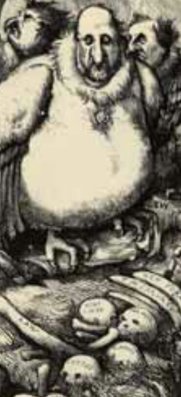
Back in 1941, Cavalcade of America had to rely on word-pictures alone to describe Nast and his work to the radio generation, in a broadcast titled Mightier than the sword. Part of a Nast depiction of Tweed and his cronies as vultures.

Nast and his editors took on one of the most powerful political bosses in American history, the head of New York City’s Tammany Hall in the 1870s.

Rather than spoil the radio drama, I will just stop there for now. Let’s just say that Nast’s images were not too subtle.
For more samples of Nast’s cartoons, take a look at Wikpedia’s Thomas Nast page and its link list.

Wikimedia Commons was the source of the Nast image above. The charming Boss-Tweed-as-vulture image is from The World of Thomas Nast page at OSU. Hmm. I wonder if that image is where Batman’s creator got the idea for the Penguin.

Posted in 19th century, cavalcade, historical figures, newspaper crusades, political corruption | Leave a comment

A journalist romance for Valentine’s Day

The Old Itch (Kit Gaynor)

Who better to tell a tale of romance and deadlines than an actor named Frank Lovejoy? (I think he was much more convincing as dusk-to-dawn columnist Randy Stone than he had been as the Blue Beetle some years earlier.)

“Sometimes the best stories a reporter gets are the ones he can’t print” is his opening line in this Night Beat episode from 1952, one sometimes listed in collections as “The Old Itch” and sometimes as “Stone’s Love Affair.” (And in the current archive.org collection, the file is misnamed “Reformer,” which is a different episode. For now, the link works.)

Somewhat reminiscent of the Spencer Tracy — Katherine Hepburn battle-of-the-sexes newspaper film “Woman of the Year,” the usually solitary Stone’s romance is with a star woman journalist. She’s a foreign correspondent who wears mink, sports “the kind of tan you get at spots like Waikiki,” drinks him under the table, and beats him to more than one story. (One he couldn’t print anyway because the source was a personal friend. Media ethicists take note.)

“I planted myself at the Press Club bar and thought dark thoughts about Kit Gaynor. Sure I’d heard of her. She was one of those ‘first’ women, first to fly in a bomber, first in a jet, first to slip unnoticed onto a troop ship at the canal locks and go to the South Pacific. And most of all she was the first dame reporter to make a real chump out of me. I had a drink to each of her blue ribbons.”

Later, she joins him at the bar:

Stone: “How did you get in here? We got a rule about women.”
Gaynor: “I’m a newspaperman. I hold press club cards all over the world, even in Chicago.”
Stone: “I wish you were a newspaper man. I’d flatten you.”

Not only does she have stories about interviewing Tito and Churchill, she even scoops Stone and the rest of the Chicago press corps on another story while she’s out buying a steak for his dinner. That’s just before she runs into an old friend who’s a jet pilot and hops his flight to New York. Then she’s off to Europe, leaving Stone with a lighted — but not entirely unrequited — torch. As the episode comes to an end, Stone is contemplating the changes marriage might make in his career, and she’s on another plane — off to Korea, her career reminiscent of Pulitzer winner Marguerite Higgins or Margaret Bourke-White.

Posted in 1950s, Drama, foreign correspondents, romance | Leave a comment

Belated anniversary and welcome to visitors

Greetings to members of the Metropolitan Washington Old-Time Radio Club, whose Mark Anderson put a nice mention of this site in the group’s Feb. 3 email newsletter. (Scroll down for a half-dozen episodes of the “Europe Confidential” series he mentioned.)

Within an hour or two, I had more mail, this time from Jack French, author of Private Eyelashes, a terrific study of women detectives on old time radio, who reminded me that I had a password-protection block on one of the pages here that mentions a series I had read about in his book. No more! Go to: Hot Copy.

Other newcomers, for more about my project see the “About” menu above. But just last week I noticed I had let a couple of events slip by without comment — my 100th “post” about one of these old-time radio episodes with journalist characters, and the anniversary of starting the blog in January 2011, so that’s plenty of excuse for a recap.

This site has two parts. Tablet and mobile phone browsers may do their own thing with the “sidebar” and “menus,” but on a laptop or larger screen, here’s what you get:

  • The more than 100 blog posts like this one, appearing in reverse-chronological order, usually discuss one radio episode and can be subscribed to as a podcast (RSS subscription address). Those posts are tagged with “category” keywords that are listed in the right column.
  • The horizontal menu at the top of the screen lists more than 50 in-depth “pages” which also look like category names. They discuss whole series,groups of series, issues, or personalities, and are in a process of being organized. Some of these essays combine earlier blog posts.  Printed, some would be five or more pages long. One of them contains more than 100 links to radio adaptations of Hollywood movies.

My project here may be a book someday, blending my interests in newspaper-history, popular culture and communication technology. I love the fact that radio — the “new medium” of the 1930s — continued to celebrate the work of newspaper reporters, in contrast to the attitude of some “new media” folks today.

I also like to celebrate the new medium of digital archives: Almost all of the audio files linked here are hosted at the Internet Archive (archive.org), most of them in collections by the Old Time Radio Researchers Group.

Appropriately, JHeroes.com began with a couple of episodes about the flashiest of radio heroes, The Green Hornet and Superman, both of whom had secret identities at major metropolitan newspapers.

Since then, I’ve written about both fictional and historical print journalists whose stories were dramatized on radio between 1930 and 1970. The horizontal menu at the top of the page lists “aggregation” pages where I’m gradually pulling together the story of whole series or themes — such as the adaptation of Hollywood “newspaper movies” for radio broadcast, or the historical reenactments of “Cavalcade of America,” “Soldiers of the Press,” “The Big Story” and other programs.

(I’ve also made this blog serve a dual purpose as a discussion space for a course I’ve taught on the portrayal of journalists in popular culture of all kinds: novels, short stories, films and television, as well as radio dramas. That helps explain the rather deep list of films adapted for radio. Although I’m not teaching that course this semester, I still keep a running list of bookmarks to related items I find on the Web, and that bookmark list is echoed at the top right side of this page.)

Posted in j-heroes, Old Time Radio Groups | Leave a comment

Reporter’s manhunt in London & Tangier

Old-fashioned shoeleather reporting gets a good demonstration in the Europe Confidential episode called The Raymond Shortly Affair, which takes reporter Mike Connoy from his Paris office to London and from there to a Tangier nightclub and some intrigue involving a mysterious woman.

There’s not a lot of action, but Connoy shows that he can follow leads and conduct interviews, as he tracks down a man who has an inheritance coming.

The missing Englishman had run off to join the service during World War II. He also changed his name. Meanwhile, his parents home and their whole street were destroyed in the bombing. In the years since the war, the street has been rebuilt and resettled, losing a lot of local memory, so Connoy has his work cut out for him.

It’s not quite “Call Northside 777” in terms of “journalism procedural,” and it’s hard to imagine one of today’s news organizations having an international-travel budget for this kind of “human interest” feature story. As radio dramas go, except for a hint of “film noir” in a twist at the end, there’s not a lot of suspense and no threats of death or violence. But it’s still worth a listen.

As with many “Europe Confidential” episodes I’ve been writing about, this one may have been a rewrite of a previously used script from another “Towers of London” production company radio program, although I don’t recognize it in any of the usual-suspect “The Lives of Harry Lime” files. (If this were a Harry Lime plot, I’d expect to find someone trying to steal the inheritance, not just find its intended recipient!)

Posted in 1950s, Europe, foreign correspondents, journalism, reporting | Leave a comment

An as-told-to tale of blackmail

The best rewrite of a “Lives of Harry Lime” episode that I’ve heard so far, transformed into a “Europe Confidential” episode with the addition of a journalist narrator, is this tale of political blackmail in which a racketeer anti-hero comes to the rescue of a former enemy.

Clay Pigeon (1951)

Senator Payne (c.1957)

In the original broadcast, Orson Welles’  “The Third Man” character, the shadowy Harry Lime, is back in America. He has been asked to put his underworld skills to work to help an old foe. The governor of an unnamed state has become a “Clay Pigeon” for a blackmailer.

“For money and hate, Lime goes anywhere,” Lime says, agreeing to help.

Welles is the narrator, with a constant smirk, raised eyebrow, and ever-present anti-hero ego befitting his character from the film.  Six or so years later, Welles’ former collaborator Harry Allan Towers produced the “Europe Confidential” series, with an American foreign correspondent as its central character, and transformed the “Clay Pigeon” script into a tale set in Paris, featuring as blackmail victim a vacationing American politician, “Senator Payne.”

Basil Rathbone’s rather generic introduction to the episode is ironic, saying that reporter Mike Connoy goes “speeding to the scene” wherever a story calls — but in this episode Connoy stays in his office, listening to a Lime-like racketeer tell him the story. At least Connoy is eye-witness to the final surprise at the end.

“I’m always interested in a story,” Connoy says early on. The racketeer tells him the Senator’s investigations are what forced him to flee to Europe, a plot element that would have suited Harry Lime, too.

The as-told-to storytelling device works well here, and I enjoyed the tale more without Welles as both protagonist and narrator. Splitting the storytelling between two actors’ voices helped. Lionel Murton plays Connoy; the other cast members aren’t identified, but their European accents add variety to story and its sometimes flowery prose. (Even Welles and the cheery “Third Man” zither music in the background of “The Lives of Harry Lime” begin to get old after a while.)

Dialogue and description are lifted verbatim from the earlier script with surprising ease. “The wind from the Seine…” is described colorfully in one story; it was “the wind from the East River” in the other.

As far as teaching us anything about journalism, Connoy proves to be a good listener and a good summarizer at the breaks in the racketeer’s story. Finally, like the 1950s journalist he is supposed to be, the columnist delivers an “objective” moral after the bit of a twist at the end, a hint of complexity in the racketeer character’s final action.

“So that’s the story… I don’t set out to explain people. My business is merely reporting the facts. I’ll leave you to judge the answers for yourself.” — Mike Connoy, journalist

“I’ll be reading tomorrow’s paper, so make it good,” his racketeer source says on the way out.

Footnote on adaptation

Graham Greene created the Harry Lime character who, name changed or not, is at the center of both these stories. For more about the film, here’s a TCM article collection. If he or Welles wrote anything he wrote about the radio-recyclings of the  character, I haven’t found it.

But Greene did write about the transition from screenplay to book, which I had assumed went in the opposite direction. “The Third Man”  film story came first, as he noted in this preface, which was reprinted in The New York Times: 

“To the novelist, of course, his novel is the best he can do with a particular subject; he cannot help resenting many of the changes necessary for turning it into a film or a play. But ‘The Third Man’ was never intended to be more than the raw material for a picture.

The reader will notice many differences between the story and the film, and he should not imagine these changes were forced on an unwilling author: as likely as not they were suggested by the author. The film, in fact, is better than the story because it is in this case the finished state of the story.” — Graham Green, 1950.

There are no journalists in “The Third Man” itself, so I haven’t made a “Newspaper Heroes on the Air” page for it. The main character is a writer, played by Joseph Cotten. He is an author of adventure westerns and had been offered a job in publicity by Harry Lime.

However, for any readers who are getting to like old-time-radio through this blog, there was a “Lux Radio Theater” production of “The Third Man” in 1951. Here it is, an hour-long version at the Internet Archive’s Lux collection. Cotten reprises his role as Holly Martins, who describes himself as “a hack-writer who drinks too much and falls in love with girls.” He might be describing almost any Hollywood portrayal of a journalist.
(Footnote: The character Harry Lime was not played by Orson Welles in this Lux production, but the actor who voiced the role is not singled out among the dozen men named at the end. Long-time old-time-radio listener Norm Schickedanz thumbed through his copy of the book Lux Presents Hollywood, A Show-by-Show History (C.J. Billips & A. Pierce, McFarland, 1995) to let me know the mystery voice of Harry Lime was movie and radio actor Ted de Corsia.)

Posted in 1950s, adaptations, Drama, Europe, foreign correspondents, Orson Welles | Leave a comment

Journalist frames art-theft story

Listening to 1951’s Orson Welles “The Lives of Harry Lime” in parallel with the 1957 radio series “Europe Confidential” can be a surreal experience — and never more than in this episode about a stolen painting that changes from Rubens to Van Gogh through the art of script recycling.

Harry Lime: Work of Art, 1951
In the original, Lime is his usual charismatic international thief, smuggler, ladies-man and con-man. This time he’s out to charm his way to one of a wealthy woman’s old masters.

Europe Confidential: Stolen Van Gogh, c. 1957

In “Europe Confidential,” syndicated as part of a broader title called “World’s Greatest Mysteries” with Basil Rathbone offering introductions, the only continuing character is Mike Connoy, played by Lionel Murton. Connoy is billed as “Paris correspondent of a famous American newspaper,” but this is one of the episodes where he is merely the “as it was told to me” narrator — for a rewritten version of what was originally a Harry Lime script.

And this time he’s one step farther from the story. Our narrator says he only read the original news reports, so there’s no breaking-news journalist in the plot. In the real world, columnist Connoy wouldn’t keep his job for long that way! Sadly, for this blog, that means there’s not much discuss about radio fiction’s “portrayal” of journalists — except that they can make excellent narrators, and that using the Connoy character that way probably saved producer Harry Towers a bundle on fresh scripts.

At least some of the plot shifts are intriguing…

In the original 1951 story, international thief and con-man Harry Lime (“The Third Man”), voiced by Welles himself, is in Argentina to steal a painting, an original Peter Paul Rubens.

In the 1957 version, Connoy tells us about an art thief named Larry (not Harry) in Madrid (not Buenos Aires). And he’s after a painting by Vincent Van Gogh (not Rubens).

Incidentally, the Canadian collector who digitized copies of the Europe Confidential transcription disks mentioned that there were no episode titles on the disks themselves, just numbers. As a result, the titles on MP3 files at his website and the copies at the Internet Archive are improvisations. (In this case, that includes a phonetic spelling of “Van Geoff” in the MP3 filename; if someone corrects the name, the link above may stop working.)

Back to the plot: With Welles as the star, the original caper was told in the first person and had an amusing double-twist ending. As in all Harry Lime stories, we can be pretty sure Lime will not die or go to jail for long, since he must remain free to — eventually — meet his end in the sewers of Vienna in the movie “The Third Man,” dramatically foreshadowed at the start of each radio episode.

In “Europe Confidential,” there’s a triple twist, since Welles former collaborator Harry Towers (producer of both series) wasn’t constrained by Lime’s back-story or future-story.

The result is a somewhat different ending, and some closing remarks from Connoy. But in losing Welles’ Lime as the main character we don’t get as strong a replacement, and we still learn nothing about the American reporter-narrator, unlike some “Europe Confidential” episodes where Connoy is more action-hero foreign correspondent. There are also no lessons in media ethics or technique.

However, there is one bit of U.K. Fleet Street trivia in term you wouldn’t hear from a typical American. At the end of the episode, Connoy speculates about a follow-up to the events of the story — if only one could cover a meeting of a couple of the characters behind bars.

“That would have been a real human-interest story,” he says, “although it might have required a lot of sub-editing before publication.”

“Sub-editing” is a British term for what U.S. newspapers just call the work of the “copy desk.” Or, when an article needed more work in the old days, “the rewrite desk.”

Coming from the American reporter Connoy is supposed to be, either of those would be a better term — all the more because the story itself is a rewrite — and an export product that may have been heard more in England, Australia and Canada than the U.S.A.

(See the last three blog posts for my previous Europe Confidential items, which I’ll eventually combine and polish into a chapter-length “page” essay here: Europe Confidential.)

Posted in 1950s, adaptations, Europe, foreign correspondents, Orson Welles, reporters | Leave a comment