The short-lived 1948 radio series “Shorty Bell” was about a newspaper delivery truck driver who became a reporter, learning mostly from his mistakes, and from a crusty and sardonic editor rumored to have a heart of gold.
This last episode, one of the best remaining in public digital archives, was broadcast just as leading man Mickey Rooney gave up on the series. It hadn’t been able to attract a post-war sponsor despite his pre-war star power.
In this final story, Shorty has company in the learning-of-lessons, a young woman photojournalist who makes her big mistake by trusting Shorty. At the Internet Archive, it’s called Shorty Bell 48-06-26 Shorty Scoops Photographer. The moral:
“The newspaper game is a cutthroat business and the first rule is you’ve got to be sure the throat you cut isn’t your own.” — Shorty Bell
The “portrayals of journalists in popular culture” frequent theme of getting and keeping a newspaper job is well represented in this tale, along with its sexist by today’s standards “battle of the sexes” romance, and a “cutthroat competition between journalists” theme. It’s a reminder that getting a job wasn’t always easy, even in an era when medium size cities had more than one paper.
By the late 1940s, radio listeners and movie-goers were familiar with ethics-free newsroom rivalries, the “anything short of murder” approach reflected in the title card posted at the beginning of “His Girl Friday.”
Like that film, this radioplay has gunfire, some brave-to-reckless crime scene reporting, fast-paced dialogue, the inevitable office romance, and an interesting (but different) take on police-press relations. In many movies, reporters and police are adversaries. On radio, the police are sometimes quite friendly — in this case, getting the reporter and photographer front-row seats at the apprehension of a murderer, then carefully spelling their names for the story and photo captions.
The real adversaries are the reporter, the photographer and their editors. I hope their dirty tricks teach a lesson to journalism students as well as Shorty and his eventual shutterbug love-interest. Coincidentally, she is named “Winnie Lane,” perhaps a cousin or kid sister to Superman’s reporter friend Lois Lane, or to the Shadow’s comrade Margo Lane, who sometimes impersonated a reporter.
(Winnie is definitely younger than Lois, who I’m sure would have knocked Shorty on his ear after his first double-cross. But the unnamed actress playing the young photographer does an excellent job in their verbal fight scenes, some reminiscent of Rosalind Russell’s Hildy Johnson in His Girl Friday, on film and radio. )
Old time radio collectors assign several titles to this episode, including “Rival Girl Photographer” and “Winnie Lane, Ace Photographer.” Some collections also give the broadcast date as June 27 instead of 26.
There is no question, however, that it was the last story in the series.
As the episode ends, Shorty finally has a page one lead-story byline, and is sent on vacation his editor — after which, stepping out of character, Rooney announces to the studio and broadcast audiences that this has been the last episode and that he will be launching a “brand new show” in the same time slot the next week, as host of “Hollywood Showcase,” a 1948 equivalent of “American Idol.”
While the young reporter’s vacation never ended, my Shorty Bell page has links to a few earlier episodes of the series, preserved in the Old Time Radio Researchers’ collection at the Internet Archive.
Some of my favorite “newsroom scenes” in old radio shows involve a young reporter trying to land a job. Here’s the first of a couple of episodes where the job-hunter is a would-be photojournalist.
This 1947 “Crime Photographer” episode put the camera itself in the headline: “The Camera Bug.” It opens with a grumpy Casey trying to warn a young photo supply shop employee away from a photojournalism career, since he already has a wife and a regular job.
He’s “kid” to Casey, although he’s already 21. Their dialogue includes an “all you hear on the radio…” hint that the producers of “Crime Photographer” had feedback from young camera-handlers who wanted a career with as much excitement as Casey’s.
Casey: “My advice is forget it. This is the lousiest game there is. You’re out at all hours. People shove you around. You can risk your hide to get a good shot, then the city desk may stick it on page 10, if it’s used at all. This is a dog’s life, kid; keep out of it…”
The Kid: “Yeah, but you get around. And you see things!”
Casey: “I guess you believe all you hear on the radio. Well, OK camera bug, here’s the only way I know how to break in. You put in about 12 hours a day on the streets, with your eyes open and your camera ready, and occasionally you’ll get a news picture you can sell. If you’re lucky, you may get a real hot shot you can trade to a city editor for a full-time job. But you’ve got to be lucky. That’s all I can tell you.”
Right after his speech about how demanding news photography can be, Casey heads off to meet his reporter pal Annie for a mid-afternoon beer.
But by the end of the half-hour, the story is about how the young photographer’s skill with depth of focus, a small f-stop and fine grain developer — and Casey’s eye for detail — turn up photographic evidence of yet another murder.
But is it enough to land the kid a job? For that, you’ll have to listen to the story.
(For another approach to landing a newspaper job, see Casey’s own first interview as presented in the film “Here’s Flash Casey.” There’s a clip the top of my Crime Photographer overview page. The whole movie is downloadable at the Internet Archive. This cinema Flash is based on the same pulp novels as radio’s Casey, but younger and college-educated — not that a diploma is worth much to his 1938 city editor. In fact, part of the romance of landing the job is more about who he runs into on the way to the elevator after getting his first rejection.)
Finally, if you want one more job-hunting scene, check out radio’s best known — if mild-mannered — reporter, Clark Kent, as he convinces the Daily Planet editor to give him a chance. I called this early JHeroes item “Superhero ethics versus reporter ethics.”
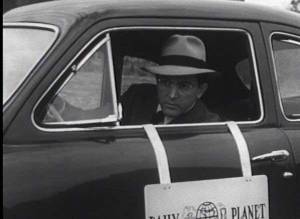
The 1950 movie Clark Kent (Kirk Alyn) wasn’t faster than a speeding bullet when racing off to investigate the Atom Man in his official Daily Planet press car, but at least he didn’t have to face a radioactive Nazi juggernaut. Radio’s Superman did, five years earlier in an eight-week battle that inspired the movie’s title, but little else.
There isn’t a lot of journalism in the epic 39-part Atom Man vs. Superman radio story, but it did provide a glimpse of employee relations at the Daily Planet — when Clark Kent was twice suspected of having a mental breakdown.
Today, the news industry is conscious that traumatic stress can affect reporters as well as military personal and disaster early-responders. There are innovative programs for helping reporters who cover war zones, mass-murders and other emotionally troubling stories. But the Atom Man story took place long before those innovations.
Atom Man radio plot summary: World War II has just ended, but not all Nazis have given up the cause. A “brilliant, half-mad Nazi scientist” has gotten his hands on some Kryptonite, the recently discovered radioactive mineral from Superman’s home planet. He injects it into a young Nazi true-believer to make him “a creature more deadly than a dozen atom bombs.” Flashing green lightning from his fingertips, this “Atom Man” may be able to destroy Superman “and all of civilization,” or so the announcer frequently reminds us.
The combined story took Superman to Germany and back to Metropolis, fighting Atom Man in two forest-leveling battles. The Internet Archive’s old-time radio collection includes both month-long daily serials, “The Atom Man,” and “Atom Man in Metropolis”, a total of 39 episodes of the 12-minute program. (The “story arcs” also have been edited into single-file versions by a mild-mannered Internet Archive volunteer, but at last viewing only the “… in Metropolis” file was playable.)
By featuring a world-threatening super-powered villain, “Atom Man” and “The Atom Man in Metropolis” are more like later Superman movies. The two serials together spanned 39 daily episodes of the “Adventures of Superman” radio series in late 1945 — after Germany’s World War II surrender, but as “one last try” by a deranged Nazi scientist.
While aliens and mad scientists became mainstays of Superman at the movies, the radio serial made more use of the Daily Planet staff to frame newsroom-driven plots. Clark Kent and friends investigated news leads, went to exotic places “on assignment,” solved mysteries, and confronted conspiracies. They didn’t just stand by while Superman took on world-threatening super villains.
But that movie-like plot is what happens in the Atom Man adventures — with the radio narrator and sound-effects staff providing battle scenes “far beyond the abilities of” 1945 Hollywood films.
However, the Atom Man adventures do offer some insight into life back at the Daily Planet. For example, Kent and Lois Lane obviously have a special relationship with their newspaper. Both rate private offices, rather than desks in the newsroom. Editor Perry White is fiery and stubborn, but tolerant of Kent’s unannounced absences from the newspaper — up to a point. And the reporters take their blustering boss with a grain of salt.
In fact, Lois mentions to a newcomer that White has fired and rehired both her and Clark “at least 15 times in the past year.”
In this story Kent’s unexplained three-day disappearance (to Germany, as Superman) pushes White over the edge — just as a job applicant walks into the office: Henry Miller’s job interview.
The tempermental White hires “Henry Miller” on the spot, and tells him to move right into the absent Kent’s office. The editor isn’t exactly diligent about checking the young man’s references: He takes his word that Miller has worked for papers in Denver and Chicago, and infers from his reference to “I’ve been overseas for a number of years” that he is a returned World War II veteran. White’s assumption, in late 1945, is understandable, along with his response:
“You boys deserve all the breaks… Any man who risked his life fighting for me deserves everything I can give him.” — Perry White to “returned soldier” Henry Miller
Actually, the affable young man who charms both White and cub reporter Jimmy Olsen is the story’s Nazi super-villain in disguise, the Atom Man. While he looks like a normal person, his blood has been infused with kryptonite, the alien element lethal to Superman, introduced in a previous radio story.
Miller’s conversation with Jimmy Olsen reveals the young cub’s impression of Kent as a reporter:
Miller: Who is this Kent fellow? What does he do, go on three-day drunks?
Olsen: Are you kidding? Kent wouldn’t touch a drink with a ten-foot pole. He doesn’t smoke either. He’s the best reporter on the paper, the best in the country.
Olsen also introduces Miller to Lois Lane, as “our star girl reporter,” clearly using “girl” in a 1940s manner — Lois was already a veteran reporter when Kent was hired in 1940 at the start of the radio series.
After Kent returns from overseas to the Daily Planet, just the presence of Miller in the same room leaves the “Man of Steel” weak in the knees and babbling about having been to Germany — seeming irrational to his colleagues, since he has only been gone a few days.
When Kent collapses at his first office meeting with the mild-mannered Miller, Lois Lane is convinced that her old friend is having a nervous breakdown. She makes a single phone call and soon muscular attendants arrive to take Kent away to a “rest farm.” They almost take the spluttering White instead (episode 12).
Kent, recovering his strength and senses, goes along with the orderlies to preserve his secret identity, but quickly escapes the rest farm and flies off to investigate the missing Nazis and try to find a solution to his kryptonite problem.
Eventually, Miller uses Jimmy Olsen to lure Superman into a trap — and an almost fatal battle with the Atom Man. (episode 16, Oct. 31, 1945)
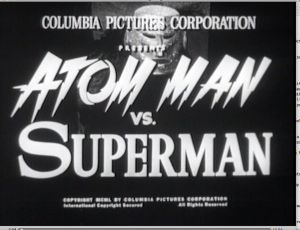
There isn’t much journalism involved, but the episode illustrates the enormous special-effects possibilities of radio: No miniature models or CGI required, just a talented sound-effects person and descriptive writing for the narrative announcer. (For comparison, even five years later the motion picture serial “Atom Man vs. Superman” had to resort to cartoon animation just to make Superman fly, and its “Atom Man” was just Lex Luthor in a glittery helmet, with a lab full of electrical gadgets in place of super powers.)
Although the Atom Man vs. Superman serial-story arc took 16 episodes to get to their first battle, it offered action-radio at its best, with impressive audio effects of massive explosions and electric crackling, a narrator describing the green energy bolts “like devils’ pitchforks,” the villain shouting “Die, Superman!” and Superman’s agonized moans of “No! Stop it! I can’t stand it!” until he was buried deep on a sandy beach.
The battle leaves Superman stripped of his costume and, unrecognized, hospitalized in a coma. As he recovers, he wanders from the hospital in a daze (and in pajamas) until he is given a pair of overalls by a friendly farmer and makes his way back to the Daily Planet. There, editor draws a quick conclusion about his mental state from his mumbled comments like “couldn’t get into the air”:
Perry White: “Kent wouldn’t listen to me and he worried himself into a nervous breakdown.”
Despite his earlier temper tantrum, White concludes the best thing for his star reporter will be to take him to Florida for some rest in the sun, another example of the Daily Planet‘s approach to employee health care without the formalities of a Newspaper Guild contract or a detailed medical plan.
I won’t fill weeks of blogging with all the nuances of “The Atom Man” and “Atom Man in Metropolis,” but they are worth a listen for reasons beyond the few journalism lessons. The sound effects, narrative writing and descriptive announcing for the fight scenes are impressively over-the-top. Also, it’s fascinating to hear how Superman’s script writers handled an “atomic threat” just three months after the bombing of Hiroshima and Nagasaki. Protection from radiation? While Kryptonite is described as the world’s most powerful radioactive substance, Clark Kent advises Jimmy Olsen only to handle it with a handkerchief, not his bare hands, to avoid burning himself.
The 1950 movie serial titled “Atom Man vs. Superman” is loosely based on the successful radio adventure, but 1950 was more distant from the Nazi threat of World War II. In the 15 film episodes, Germany was never mentioned. The atomic threat was not from a fantastic Nazi villain turned into a human monster. The villain was just the usual bald mad scientist Lex Luthor, at times disguised in a robe and sparkling “Atom Man” helmet to hide the fact that he was able to teleport himself out of his prison cell. Luthor had no super powers, just “atomic powered” weapons — including his teleportation device, a disintegrating ray and, at the climax of the serial, a missile with a nuclear warhead aimed at Metropolis. Heavily foreshadowing that final development, each week’s opening credits ran over a backdrop of real-life mushroom-clouds — presumably stock footage of government bomb tests.
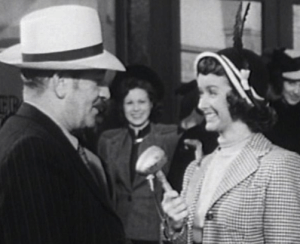
Lois Lane became a TV person-on-the-street interviewer during the Atom Man movie serial — an ironic sign that radio’s days were numbered, although the Daily Planet’s presses would keep rolling for decades.
The movie serial made one other nod to the threats of new technology: Temporarily free from jail, Luthor starts a TV news station — and hires Lois Lane away from the Daily Planet. Coincidentally, this was just as “The Adventures of Superman” producers were beginning to think about replacing the radio serial with a television series. The radio version shifted formats and networks between 1949 and 1951, then (after one more movie serial and a change of leading men from Kirk Alyn to George Reeves) gave way to Superman’s live-action television adventures from 1952-58.
Background stories: The “Atom Man” adventures followed two Kryptonite stories broadcast in September and October 1945, “The Meteor from Krypton” and “The Scarlet Widow,” presented with some duplication as files 61 through 83 on Page 6 of the Internet Archive “Adventures of Superman” collection. According to Superman archivists, the concept of “kryptonite” was created for radio in 1943, then migrated to the Superman comic books and movies. Only one episode of the original seven-part 1943 meteor storyline is available at the Internet Archive, including an embarrassing moment in reporter-editor relations for Kent, when editor Perry White takes him to a doctor (because of his collapse after exposure to the meteor). White sits in on the physical exam with the disrobed Kent, offers to help him get dressed, and almost discovers the red cape and blue tights folded under his suit coat before Kent insists on his privacy because “I don’t like people handling my clothes.”
There’s an even bigger ethical dilemma of the journalistic variety in “The Scarlet Widow” story, when Perry and Lois Lane violate a confidence from Kent because it’s too good a story not to rush into print. I’ll have to write about that sometime in the future. But it’s painful to criticize my heroes!
Jane Endicott, Reporter — premiere, January 5, 1942:
I’ve had this short-lived series tucked away on my “Soaps and Romance” page, although these adventures of a young woman reporter are not a typical soap-opera or romance series with cliff-hanger episode endings and melodramatic suds.
The series was billed as “the life of a bright and charming American girl in the world of today.” With only two episodes available in free online archives, it’s hard to tell how the series might have evolved — more adventure, more romance, more drama, or what. The two episodes still have plenty of topics for a “media ethics” class to discuss: Story-faking, undercover work, 1940s attitudes toward hiring women, and maybe an office romance brewing.
I’m adding links to both episodes here after a mention of the series by Vic & Sade scholar Jimbo on Twitter. Maybe this post will inspire someone with more information to add a comment or two and point to other sources of “Jane Endicott” knowledge.
Apparently broadcast only on the West Coast in January 1942, the program was sponsored by a regional soup — not soap — company, and its recordings have circulated among old-time-radio collectors long enough to land in pages like the “Singles and Doubles” collection of mixed items at the Internet Archive, sometimes under wrong names. To make matters worse, the MP3 recordings have been picked up, mislabeling and all, by repackagers who sell recordings.
The first episode has been renamed, but is still filed on the “A-C” approximately alphabetized page, where it was originally uploaded as an episode of an entirely different series whose name began with B. If that link stops working, it also has been uploaded again under a corrected name in a shorter collection of shows, some from collector Jerry Haendiges of otrsite.com.
In that first show, Jane lands her job by catching the new co-owner of a local paper in enough lies to convince him that she’d be a good reporter. She even has college journalism experience. She also develops a crush on him, ethically challenged though he might be. They meet when he tricks the guards at her father’s chemical plant into letting him into the building without permission.
The program did have newsworthy issues within its “of course a woman can do the job” plots. The first episode concerns industrial safety; the next is about a possible case of arson. Neither is the standard reporter-detective story with cops-and-robbers action, but more of a journalism-procedural with discussions between the editor and reporters.
Girl Bites Dog, January 7, 1942:
The second archived episode, “Girl Bites Dog,” opened with a newsroom abuzz about a dramatic oil field fire, a paper six hours past deadline, and Jane arriving to become woman’s page editor.
“This girl’s no amateur,” the new co-owner tells his partner, the editor. “She was editor of her college daily paper, she’s good.” The editor sends her off on an assignment that turns into another journalism ethics lesson when he tries to trap her with a fake story.
The episodes do have some continuity, although the series is not the cliffhanger-serial type. Identified in the archives as a three-times-a-week 15-minute CBS series was apparently regional and short-lived.
J.David Goldin’s RadioGoldindex.com listing for the Jane Endicott program , relocated in 2020 to the University of Missouri Kansas City, no longer allows you to link to individual program results the way I did on the first draft of this page, but still has the collectors entry for both episodes. Alas, he offers no information about the cast. The announcer is identified as Thomas Hanlon.
Technical note: Over years of file-swapping in tape and MP3 form, a lot of old-time radio programs are “circulating” online with little or no information about who holds the original radio transcription discs, who digitized them, etc. Errors get passed along from collector to collector. File names in the Internet Archive seem to have gotten their digital wires crossed between Jane Endicott episodes and both a Walter Winchell Navy Relief broadcast and an episode of “Barron Elliot and His Stardust Melodies.” As of April 2014, the “Bites Dog” episode is properly named at the archive, but a duplicate elsewhere still puts Jane’s name on a Winchell Navy Relief program file, and her debut is still filed as a “Stardust Melodies” show. At least one site distributing oldtime radio files compounds the error by identifying the Winchell MP3 file as a Jane Endicott episode, and claiming that Winchell was part of the program — apparently because the distributor only listened to the first few minutes of the recording, not enough to discover that it was completely mislabeled.
Listening to more of Mickey Rooney’s unsuccessful “Shorty Bell” series from 1948 — after reading obituaries and tributes to him this week — I can’t help wondering what the audience wanted from his radio newspaper-journalism vehicle: A lighter family-friendly “Andy Hardy Goes to Press,” or a 44-years-early version of “Newsies“?
With only a handful of examples of the three-month run of the show, it’s obvious the producers and writers were struggling to find out what would please sponsors and audiences.
(Note: Rooney’s first line of the episode is, “With me and the newspaper business, it was a case of love at first sight. On my part, anyway…” If the audio-player gives you something else, see the technical note at the bottom of this page for some of the amusing confusion that is old-time-radio collecting.)
As the story opens, Shorty Bell’s gruff editor sends his scrappy protege off to cover what he calls a June “graduation,” even though the lad’s idea of a spring feature assignment is a day at an amusement park, not on a college campus. Actor John Hoyt plays the “tough editor/boss” stereotype even harder than Ed Asner did Lou Grant on television.
Editor Robard: “Mr. Bell, the day reporters on this paper choose their own assignments, we will run an eight-column head announcing that I am Queen of the May.”
Robard’s sense of humor is newsroom-coarse, and it takes Shorty a while to get the joke — that the “graduation” is a prison inmate’s funeral. Listeners get a lesson in appropriate contexts for humor when Shorty tries the same joke with a couple on the train, not realizing he’s talking to the dead man’s sister. A tough old boxer sets him straight.
Although the show was on its last legs, it was still gradually introducing Shorty’s character — in this episode we find out that before going into the service, Shorty had been a runner-up in a boxing tournament.
The “Hero” in the story’s title fits the other two main characters: a boxing legend the reporter meets on the train, and the editor, Don Robard, his idol and mentor. The plot turns on difficult decisions reporters sometimes must make between personal friendships and journalistic responsibility.
Robard, it turns out, was the man who sent the recently deceased former political boss to prison — although they had once been close friends. The dialogue may looks more purple on paper than it sounded coming out of radio speakers. When Shorty finds out the truth, he tells the story to his boss:
Shorty: “It’s about two fellows who were friends. One was a political boss and the other was a newspaper reporter. The reporter broke a big bribery story and sent his friend the politician to jail for 199 years. Do you think it’s a good story, Mr. Robard?”
Robard: “Not very, but then I never cared for cheap melodrama. However… for all I know, you may have the plot for the next Great American Novel, or even better, next year’s Academy Award movie. But I doubt it. It sounds like soap opera to me.”
Shorty: “Augie Davis was your friend.”
Robard: “Augie Davis was a corruptor of civil servants…
Keep your distance, Mr. Bell.”
Shorty: “What kind of business am I in anyway?”
Robard: “It’s not a business as far as you’re concerned; it’s a profession. Leave the ‘business’ aspect to the accountants and advertising boys. You’re very young, Mr. Bell, younger than I thought. Grow up. That’s all for today.”
I like some of the portrayal of Robard. Shorty’s not the only one he’s brusque with. He interrupts a sportswriter’s story pitch with lines like.
“Delete the grace-notes… and the build-up.”
This evening’s half-hour Shorty Bell melodrama has plenty of build-up and a few grace-notes. By the end, it’s no surprise that Shorty faces a moral dilemma similar to the one Robard faced years before.
The editor is wise enough to see why Shorty, having uncovered a racetrack scandal, refuses to reveal the name of a wrong-doer:
“Why this reticence, Mr. Bell? Are you involved in some way with your Mr. X? A friend of yours, perhaps. It sometime does happen that a reporter covering a story foresees the possibility of damage to a friend if he goes to the root of a matter. I’m sure I’ve heard of cases like that.”
The last 10 minutes of the program would be be a good discussion-starter in a journalism ethics class, if the modern students have patience for old-time radio. If they stick with it to the end, they’ll even hear a reference to the even more dramatic real-life case of Jake Lingle — a Chicago reporter who was murdered after developing a too-cozy relationship with organized crime.
Will Shorty’s conscience, or Robard’s experience, convince the lad to avoid Lingle’s fate? I wonder whether 1948 radio listeners knew the complexities of Lingle’s story from the brief reference in the program’s dialogue — or if they just took it as a reference to a reporter who was killed over an expose.
Cast note:The boxing champ’s gravelly voice may be familiar. The actor is William Conrad, one of the hardest-working and most recognizable voices in 1940s and 1950s radio. He was also the original “Matt Dillon” on radio’s Gunsmoke, the portly detective “Frank Cannon” on television, and the city editor in the cryptically named 1959 newsroom melodrama “–30–” with Jack Webb. Conrad’s “It’s a newspaper, that’s all… the best buy for your money in the world” newspaper eulogy from that film still appears on YouTube and is in at least one popular introductory reporting textbook.
Technical note:At this writing, several collections of “Shorty Bell” episodes on the Internet have swapped the names of two programs, “Crooked Hero” and “Movie Script.” I’ve alerted the keepers of the sites; if they correct the filenames without my realizing it, my links to the individual episodes may not function any more. In that case, a visit to the Internet Archive’s Shorty Bell collection page may sort out the confusion.
The collectors also disagree on when this particular episode was broadcast (June 6, 13 or 20), and what to call it. “Crooked Hero” is also known as “State Prison Funeral” and “Growing Pains,” all supported by the plot and dialogue. Collectors may have estimated dates and composed their own names for episodes, then copied each other — sometimes adding typographical errors, or trusting newspapers’ printed program listings. Alas, I don’t have labelled transcription discs, a formal network broadcast log or library collection of titled scripts to refer to; perhaps they exist somewhere.
Using newspaper listings, the DigitalDeli research site moves the “Crooked Hero” (“Growing Pains”) episode up to June 6 (other collectors say 13 or 20) and lists a missing episode on June 20, while the others say the June 6 show is the missing one. They all agree the final episode was the last week in June. It is variously titled “Shorty Scoops Photographer,” “Rival Girl Photographer” or “Winnie Lane, Ace Photographer” and listed as being broadcast on June 26 in the Internet Archive (which would be a change in the broadcast’s day of the week) or on the 27th, which Digital Deli says is supported by published newspaper listings.
For now, the link at the top of this page should play the “Crooked Hero” episode from a file named “Movie Script.” If it actually plays a farce about Shorty writing a movie script, the file-name error has been corrected by the Internet Archive.
The intended (Crooked Hero) episode’s opening line: “With me and the newspaper business, it was a case of love at first sight. On my part, anyway…”
The wrong (Movie Script) episode’s opening line: “When I first got into the newspaper business, I didn’t know a comma from an apostrophe. Don Robard, my managing editor said he was hiring me for my curiosity and my brass, not for my writing ability…”
Mickey Rooney, who died Sunday at 93, was most famous for playing scrappy, funny and musical young men in the 1930s and ’40s.His starring role in this spring 1948 radio drama didn’t have any “Hey kids, let’s put on a show!” musical numbers, but it put his tough city kid persona in a memorable newspaper title role, as “Shorty Bell, Cub Reporter” (first episode, MP3).
The series didn’t take off, perhaps suffering from part of the post-war career lull Variety mentioned in Rooney’s obituary: “The very qualities that had made him an appealing child star now began to grate. His energetic cockiness seemed forced and egotistical in an adult.” The series began at the end of March and was replaced by a musical variety series in July, but a few sample episodes have made it into collectors’ archives online.
That energy and cockiness were certainly characteristics that suited Shorty Bell, a World War II vet convinced that he has printer’s ink in his blood. But Rooney’s charm and self-effacing sense of humor come through too.
Shorty’s father, the character tells us, was a Linotype operator, and from him the young man inherited a passion for the news and a dedication to his father’s paper, which he delivered as a boy before going off to war. However, at the series’ start, the closest he has come to the newsroom is the driver’s seat of a newspaper delivery truck.
In this premiere he wangles a brief interview with his hero the editor, Don Robard, played by John Hoyt, which turns out to be a job-hunter’s nightmare. But he sums up his attitude in a sentence, “I’ll keep coming back.”
Shorty may not have news training and his “nose for news” needs some refining, but he has a classic naive enthusiasm for the news business — a characteristic popular in fiction, if not in all newsrooms. Richard Harding Davis wrote about it a half century earlier in “The Reporter Who Made Himself King“:
“Now, you cannot pay a good reporter for what he does, because he does not work for pay. He works for his paper. He gives his time, his health, his brains, his sleeping hours, and his eating hours, and sometimes his life, to get news for it. He thinks the sun rises only that men may have light by which to read it.”
Although there are only a few episodes in the Internet Archive radio collection, I think “Shorty Bell” is worth a listen. I’ve started an overview page about the series here, and will be back with quotes and discussion of other episodes.
This opening episode, dated March 28, 1948, is described by the announcer as a “premiere” and in some radio archives is labeled “aud” for “audition.” There is no studio audience, unlike the later episodes. The program is to be a “continuing novel written especially for radio…” and, as that suggests, the first-episode ending is a cliff-hanger, with Shorty’s hope for a reporting position hanging in the balance. Unfortunately, the available episodes do not include the second one, although it’s obvious from the later episodes that Shorty did land his job as a cub reporter, along with taking some night school classes.
According to the Buffalo Courier-Express for March 28, 1948, the program was conceived as a continuing “novel for radio,” to be written by two Hollywood writers who were former newspapermen, Frederick Hazlitt Brennan and Richard Carroll. Brennan also had written Rooney’s film “Killer McCoy.”
Critics’ opinions of the debut were mixed. Seymour Peck of the New York tabloid “PM” was caustic:
“It was, in fact, a little shocking to have a highly touted radio show make its debut parading an utterly trite, uninteresting situation and a trite, lifeless set of characters. There wasn’t a surprise anywhere in the half hour…. Only Mickey, selling his own lively personality, giving vitality and warmth to a very deficient script, made the show tolerable.”
The episodes dated as being broadcast in June 1948 abandoned the cliff-hanger format and the original writers. Each broadcast presented a full story in a half-hour, with more attempts at comedy, although they do carry through the theme of Shorty learning his way around the newspaper job. They also have live-audience reactions, including loud laughter that sometimes seems to be prompted by things the audience saw, not heard.
While there are only four downloadable files at the Internet Archive’s “Shorty Bell Cub Reporter” page online, the computer file names and actual program names have been swapped between the episodes titled “Movie Script” and “Crooked Hero.”
In the more melodramatic plot, “Crooked Hero,” Shorty is sent to cover a gangster’s funeral, but a chance encounter on the train leads to a sports corruption story he’d rather not tell.
In the actual “Movie Script” episode, Shorty has written a newsroom-drama on the side, but an agent sells it to Hollywood as a Lassie-type dog adventure, based on doggedly reading just the title. Meanwhile, his editor insists that anything written on company time belongs to the newspaper anyway.
J.David Goldin’s “Radiogoldindex.com” list of his pioneer radio collection shows an additional “first episode,” which is not in the Internet Archive files.
The Digital Deli Too Definitive Shorty Bell Radio Log with Mickey Rooney and William N. Robson features a longer episode list and some different dates, based on extensive research on Rooney’s radio appearances as well as the show itself. It lists cast and staff, newspaper program logs, and write-ups from radio trade magazines to document the shifts in plot, crew and format.
That’s where Lenore Case, secretary to the editor of The Daily Sentinel, is browsing ads for engagement rings in the opening scene — but not because of romance. Editor and publisher Britt Reid has received several letters from readers who answered an “engagement ring” ad and only when it was too late realized that the ad and the seller never explicitly said the ring was a diamond.
It’s not just crooked, it’s unpatriotic: In this 1946 broadcast, the swindlers’ targets are recently discharged World War II veterans. Reid has reporter Michael Axford read one of the letters:
“The police say there’s nothing can be done about it since the person who sold it to me didn’t say it was a diamond. So I’ve been gypped in a racket that the police can’t touch. I’m surprised a newspaper like yours would carry ads like that. — (signed) an ex-G.I.“
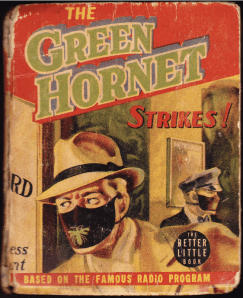
Naturally, Reid says he will cancel the misleading ad. He sends Axford to pose as a prospective buyer to find out how the ring racket works — although he admits the racketeers have been too clever to be pursued by the law. While the newspaper might expose the racket, it can’t put the careful crooks in jail without the help of the editor’s alter-ego, The Green Hornet.
Coincidentally, Reid has another “inside the law” wrongdoer in his sights — a corrupt politician. So, with typical Hornet guile, he pretends to be a crook himself and turns the two wrong-doers against each other to put both in jail.
He breaks into the swindlers’ office and steals their stock of worthless rings, but leaves evidence implicating the politician to trick the ring swindlers into believing the he is the Hornet. They break into the politician’s house, hoping to both retrieve their property and collect a reward for turning the Hornet over to the police.
Of course they don’t find any Hornet paraphernalia at the politician’s house. But they do catch him with his safe open — full of evidence of the unrelated graft case. Their break-in triggers an alarm; Axford, accompanying the police, identifies the racketeers; the racketeers point out the graft evidence on a table in plain view.
Fortunately the 30 minute radio episode didn’t have to spend much time on laws of evidence — it suggests the arrival of the police led everyone to confess their wrong-doing.
As far as journalism lessons, this episode is pretty much limited to the continuing theme of a newspaper working to help the average citizen by exposing rackets and corrupt politicians, and perhaps a theme of
newspaper teamwork — Miss Case’s research, Axford’s undercover reporting and Reid’s editorial decision making.
The ethically scrupulous listener will notice that Reid’s executive approach includes a willingness to break laws in order to get evidence, tactics not recommended by the Society for Professional Journalists. But — as usual — Reid leaves that to his alter-ego wearing the Hornet mask, not to any press-card carrying members of the Sentinel staff.
Just when I thought I had a nice round figure — 50 radio adaptations of Hollywood films about journalists — I discovered that two movies I had already written about weren’t on the master list, which includes quite a few I haven’t gotten around to describing in detail. And I found that one was on the original list in error.
So, for now, the list has 51 titles — usually with journalists as heroes, villains or major characters.
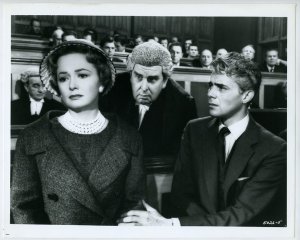
Olivia de Haviland, bewigged Robert Morley and Dirk Bogarde in the eventual 1959 film of LIbel
This one, a courtroom-drama titled “Libel,” is a special case in several ways. The journalist implied in the story’s name doesn’t even appear — but a Gazette newspaper slam inspired by a blackmailer-turned-whistle-blower is at the root of the libel case. Some 16 years after World War I, a British nobleman sues over a story calling him an imposter — a Canadian who killed the Englishman and stole his identity when they escaped from a German prison camp together.
If there’s a journalism lesson here, it’s “be careful of your sources.” And the scandal-mongering Gazette may remind you of some contemporary British tabloids currently appearing in court over playing checkbook journalism and breaking other rules to get its stories. At least there were no cell phones to tap in the 1930s.
This story itself is full of suspense — as circumstantial evidence stacks up against the shell-shocked “Sir Mark Loddon, Bart. M.P.” The radio series Lux Presents Hollywood liked the plot enough to bring star Ronald Colman back to present it again in just two years. (The 1943 script may show some improvements, but I haven’t compared them line by line.)
As a radio adaptation, another remarkable thing about “Libel” is that it went from Broadway to television in the 1930s — but didn’t make it to the movie screen until 1959! More on that, an unlikely Frankenstein connection, and a link to the 1943 version, below.
Back to my adaptation list update: I also discovered that one “movie” I’d listed apparently was an original radio play: An episode of Stars Over Hollywood titled “The Love Tree,” now moved to the Soap Operas and Romances page. It’s not a great drama, but the plot would have made a decent B-movie. It has a spunky woman photojournalist, a city editor with a sentimental streak behind a gruff exterior (think “Lou Grant”), a star reporter who can be a dope about love, and a surprise appearance by an autographed copy of one-time journalist Walt Whitman‘s classic volume of poetry, Leaves of Grass!
(If I’m wrong and there was a film version, earlier or later, please let me know!)
I guess when I put that one on the “adaptations” page I was just assuming from its name that “Stars Over Hollywood” was an anthology of movie plots.
It also dawned on me that the adaptations page should mention radio series that inspired movie adaptations, rather than the more common cases where movies came first. So you’ll find a quick mention of a few newspaper-related radio dramas that led to films and TV series — Superman, The Green Hornet, The Big Story and Big Town, which already have their own JHeroes sections.
I’ve also added a note that some items listed are slight variations on the theme — the radio version may not have been adapted from a film, but had a common ancestor in a play or novel that also inspired a film or television program.
I haven’t seen the film, but it’s too bad that the radio plays don’t give us a scandalmonger British tabloid journalist as a villain. Instead, the hero’s main antagonists are the blackmail-minded fellow prisoner and the newspaper’s defense attorney — played in both adaptations by Otto Kruger, who also appeared in a number of newspaper movies, including Scandal Sheet (1939) and Power of the Press (1943).
On Broadway, “Libel” was staged by Otto Ludwig Preminger and starred Colin Clive, perhaps best known as Henry Frankenstein in the 1931 “Frankenstein” and 1935 “Bride of Frankenstein” — one of seven films he made that year before the December opening of “Libel” on Broadway, where it ran for 159 performances, according to IBDB.
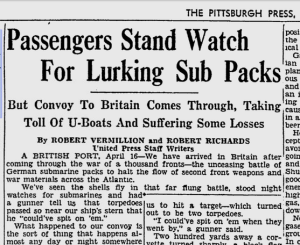
The Old Time Radio Researchers Group collection of the United Press radio drama “Soldiers of the Press” at the Internet Archive contains fewer than half the episodes of this World War II series, but so far the reporter best represented in the set is not Walter Cronkite or some other household name — he’s a correspondent named Robert V. Vermillion. This “Atlantic Convoy” radio program about two U.P. men on their way to London echoes their published story at the right, from the April 16, 1943, Pittsburgh Press, as preserved in Google’s newspaper archive under the headline “Passengers Stand Watch for Lurking Sub Packs.” It wasn’t the biggest war news of the day — buried all the way on page 22, next to another U.P. story by Harrison Salisbury with a map and a larger headline. There was even bigger U.P. news from the Pacific and North Africa on page one of that day’s 56-page paper. But the first-person story of war correspondents Vermillion and Robert Richards crossing the Atlantic made for good radio drama.
As the announcer says, it’s a “an eyewitness account… of one convoy’s battle with the U-boats, a vivid picture from their U.P. dispatches of the sort of thing that happens, unchronicled, almost any day or night, somewhere in the Atlantic.” The last few phrases of that sentence are almost verbatim from the newspaper story.
The radio play weaves-in other passengers playing cards and singing to keep their spirits up, adding dialogue to expand small points in the story. A reference to a “dawn watch” becomes a conversation between a crewman and Vermillion about getting up early. A radio sound effects crew takes inspiration from the reporters’ more descriptive writing, such as this passage in the Pittsburgh paper:
“… the passengers organized 24-hour watches to relieve the weary crew. We stood two of them, watching brilliant bursts of star shells lighting the convoy whenever a sub’s presence was suspected. On a dawn watch we saw the spectacular battle of the torpedoes. “The action began in the gray before dawn. A ship to our starboard started streaming machine-gun bullets into the water a few feet off our stern. The tracers bounced like brilliant orange balls, ricocheting across the water, clanging into the ship’s side and ripping past our heads.”
“Soldiers of the Press” was a “stories behind the stories” series recorded by actors in a stateside studio while the real reporters were overseas, so any voices you hear saying “This is Robert Vermillion” in the various episodes probably aren’t him — but they still outline the tale of a reporter’s career, which took him from New York to Africa, Greece, Italy, France and Germany during the war. (Update: In an email, Vermillion’s son Bob tells me his dad recalled recording a few stories, and that it’s possible his actual voice could be part of some broadcasts.)
Vermillion continued with U.P. in Miami during peacetime, then became a war correspondent again in Korea, and remained in Okinawa to run a newspaper there with his wife for several years. Later he returned to the U.S. and worked for Newsweek for 20 years. He died in 1987, at 72, according to his U.P.I. obituary, which is also my source for some of these biographical details.
The radio series documents his entry into being a war correspondent — sailing to Europe with U.P. colleague Robert Richards in that episode titled “Atlantic Convoy.” His other dramatized stories include “Anzio Diary,” a compilation of features about life among U.S. troops after the Allies established their beachhead in Italy, followed by “The Road to Rome.”
U.P.’s approach to dramatizing its courageous reporters “stories behind the stories” is best represented by its account of Vermillion’s first parachute jump, when he volunteered to accompany paratroopers on a 2 a.m. mission into Southern France — with 45 minutes of training.
“What’s on your mind, another scoop for the United Press?” a colonel asks him.
“Excuse me for saying this, Mr. Vermillion, but you’re nuts,” a serviceman adds when he hears of the plan.
Later, two officers discuss the newsman’s motivation…
“Thirsting for a little excitement,” says one. >> “After what he went through in Italy?” “Yes, he wants more. This time he’ll really get it.”
The “what he went through in Italy” reference is well represented in two other “Soldiers of the Press” episodes (downloadable below), and perhaps more that are not in the Internet archives. Vermillion also appears in one of the last European Front episodes of the series, “Prisoner of War,” in which he is sent to bring back U.P. reporter Edward Beattie from the German prison camp where he was held in 1945. It’s a scene Beattie also recounted in his autobiographical Diary of a Kriegie.
While a search for Vermillion’s byline in several news archives didn’t produce any stories about Beattie’s release, it did turn up his chilling 1945 accounts of the liberation of another prison camp, and of American troops bringing German civilians to see the mass graves of prisoners murdered as the Allies approached — then enlisting the Germans to help identify and re-bury bodies.
And while the online archive search did not uncovered Vermillion’s “Soldiers of the Press” story about a wedding being interrupted at the Anzio beachhead, it did find a four-column photo of his own 29th birthday party at the base of operations in Italy. The caption read, “Celebrators Pick Up Where They Left Off: Robert Vermillion, correspondent, left, had a real “bang-up” twenty-ninth birthday celebration in Naples, when a Nazi bomb interrupted the proceedings…”
Vermillion on Soldiers of the Press The following are downloadable episodes at the Internet Archive:
43-05-16 (028) Robert Vermillion – Atlantic Convoy (also features UP’s Robert W. Richards)
Editor’s note: Tracing connections between U.P.’s published stories and the “Soldiers of the Press” broadcasts can be tricky, since the radio episodes did not mention the original articles or the dates on which they were filed. They may have been aired weeks, even months, after the news was reported in print; individual radio stations may have fit the programs into their schedule at different times. The “behind the scenes” feature-style treatment suited this arrangement. In the case of “Atlantic Convoy,” based on a news story published in April 1943, the Old Time Radio Researchers collection dates the program was broadcast in May. J. David Goldin and Digital Deli found indications it was broadcast by some stations in July. (Collectors’ dating could be based on estimates, transcription disk labels, newspaper broadcast logs, or the names of MP3 files of uncertain provenance circulated on the Internet.)
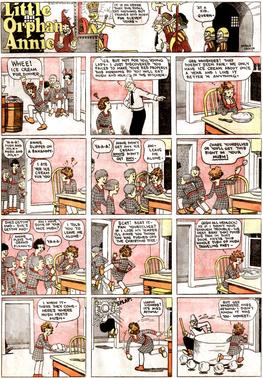
Popular radio series characters of the 1930s, ’40s and ’50s often visited or were visited by newspaper reporters and editors. Little Orphan Annie, decades before her Broadway debut, paid a visit to a local editor on the occasion of her birthday in 1935… 11 years after she made her debut in the New York Daily News.
Of course a community’s outpouring of affection for the spunky orphan would be worth a story — even if her birthday present from Daddy Warbucks wasn’t a thinly veiled cue to hawk birthstone rings –as well as Ovaltine– to the kiddies back home.
The birthday party story spans four days in this collection at the Internet archive: https://archive.org/details/LittleOrphanAnnie1
(The single episode player on this page is the second 15 minute segment in the storyline.)
While it’s not as adventurous a view of a journalism career as young listeners got from Superman or The Green Hornet, this group of episodes with Annie’s local weekly editor did give kids a hint of an idealized role of the newspaper in the community. In this case, the friendly editor brings together Annie and a businessman who needs her help — among other things, to keep paying his bill for newspaper ads! The editor’s conversation with Annie explains a bit about newspaper economics…
“That’s what I usually do after the paper comes out — spend the next couple of days collecting for the advertising.” — Mr. Caslon, the editor.
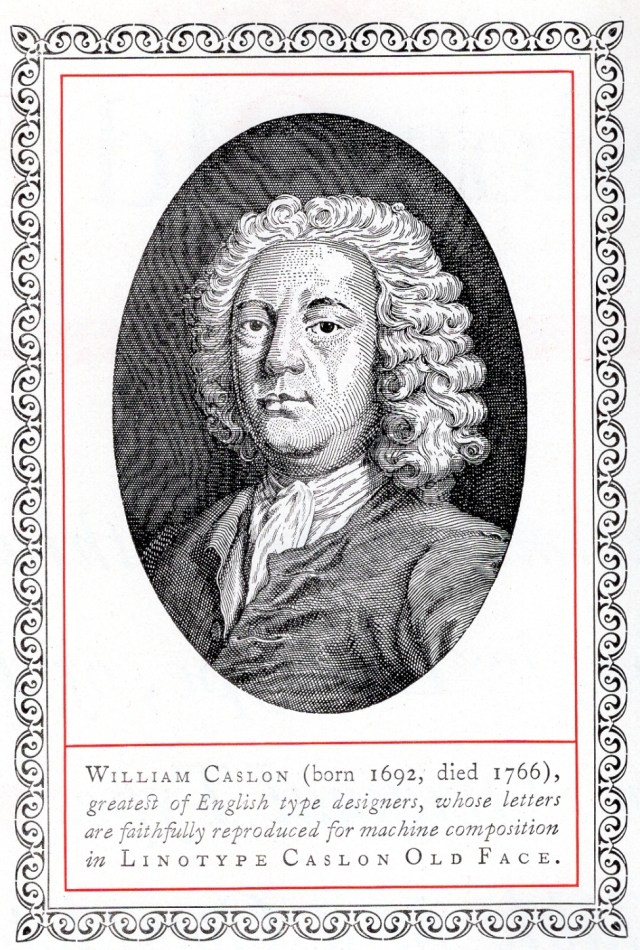
Journalism students and letterpress fans will appreciate the editor’s name, one of the most famous names (and “faces”) in printing — after William Caslon an 18th century designer of typefaces.
And, of course, Annie herself was a child of the newspapers — a hit radio serial (1930-42) with millions of listeners, based on a hit newspaper comic strip (1924-2010). See more of Annie’s history at Wikipedia.
Update:
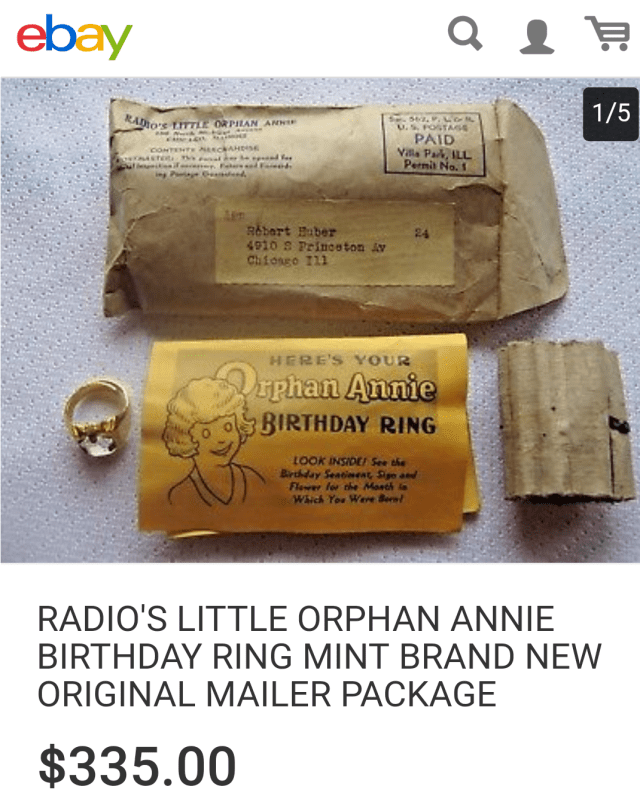
While the preceding episode about Annie’s Birthday Party doesn’t have a journalism angle, advertising and marketing students should be impressed (and the rest of us aghast) at the integration of the “birthday ring” promotion into the story. See the full birthday party script at Generic Radio Workshop.
The 1935-36 10-cent premium rings have become 21st century collectibles. An eBay seller offered one in its original packaging in 2018…

 Newspaper Heroes on the Air